Read About Indian Chai Stories

Our Writers - in Pictures!

Saturday, July 20, 2019

The Flimsies of the Second Flush


by Aloke Mookerjee

With frequent spells of the eagerly awaited pre-monsoon showers, tea bushes pruned during the previous cold weather would begin to sprout new shoots that gradually filled the skeletal form with lush new green leaves. Slowly, the characteristic ‘flat table’ of the tea bush would begin to form by the regular rounds of ‘tipping and plucking’ the new growing shoots at a specific height. The factory, shut for overhaul during the dormant cold weather months, would be cranked up for manufacture yet again. Back in those days, teas manufactured by the estates of the Dooars Tea Company (as with most others in the Dooars) were of the ‘Legg Cut’ variety.

The Legg-Cut machines used in the tea factories were originally tobacco cutters that had been modified and adapted to tea. Its wide spread use in the Dooars made the term ‘Legg Cut’ synonymous and singularly associated with this North Bengal region.

Unlike the ‘Orthodox’ or ‘CTC’ types of manufacture where the freshly harvested leaves are first ‘withered’ for several hours before the subsequent processes, manufacture of Legg Cut teas began immediately on arrival of the freshly harvested green tea leaves from the garden. The process resulted in a brew that took on a bright copper colour when milk was added to it. While these teas were still in demand then, particularly in the UK, they fetched lower prices than the CTC and Orthodox varieties. Apparently, the blenders of Calcutta and London used the strong and ‘coloury’ Dooars teas as ‘fillers’ for their brands by adding a generous dose of it to the more mellow and costlier CTC variety.

After the pale and aromatic ‘Darjeelings’ that I was accustomed to, the Dooars ‘Legg Cuts’ tasted rather harsh – not unlike freshly mowed grass! It took me a while to get accustomed to it but never enough to be a fan of this robust brew. The plantations of N.E. India, including the Dooars, experience a brief but very special spell every year, from around the end of May to the third week of June, known to all in the tea community as the ‘second flush’. When the unmistakeable ‘brightness’ in the infused tea quite suddenly appeared during the production process and its taste changed, overnight, from the plain and ordinary to a rich and mellow cup, we would know that the ‘great’ second flush had finally arrived.

The eagerly awaited and much sought-after Assam second flush teas fetched the highest auction prices (excluding the ‘Darjeelings’ ofcourse). Similarly, for the poor cousin, the Dooars teas also although never at the lofty levels of her neighbouring brethren states!

Prior to its ‘appearance’, the ‘Head Tea House Babu’ of Nagrakata and his factory staff would gear themselves up, in anticipation, and ensure that all potential flaws in the production process had been well contained so as not to cause a loss in quality whether owing to machinery failures or negligence of the factory workers. The field staff would now put in their extra effort to ensure that the quality of the leaf harvested was never a cause for contention. Samples of the manufactured teas, packed in tiny flat round tins, would be air-mailed every week to the brokers in Calcutta and London for their evaluation and comments. The Calcutta and the London Auction Reports, mailed to the estate, would begin to arrive punctually every week. Both would be eagerly scanned upon receipt.

The London Auction Report was popularly referred to as ‘the Flimsy’ for the fine tissue like quality of its air-mail paper. ‘The Flimsy’ listed the names of all estates across the world selling their teas through the tea auction house located in the historical Mincing Lane near the Thames in the City of London. I was then unaware that this quaint and charming ‘tea lane’ of international fame was, in the days of yore, not only the most important centre for tea trade but was also a prime hub of the world’s spice trade (alongside Venice and Amsterdam) and of the infamous money spinning Opium and Slave Trades of the eighteenth and nineteenth centuries. The ‘quartet’ formed by tea, spice, opium and slaves brought in untold wealth to coffers of this tiny island nation, as much as it did to the traders.

In comparison, the hoary past of the Calcutta Tea Auction centre famously known as ‘Nilhat’ house would seem to appear docile with its history of first starting as a bustling trade centre of a mere vegetable dye, Indigo, before it succumbed to the onslaught from the newly formulated, cheaper chemical colours. The Calcutta Auction Reports listed only those estates that sold their teas through Calcutta. Along with London, they formed the two major tea auction centres of the world with smaller ones at Cochin (now Kochi) in South India, Colombo in Ceylon (now Sri Lanka) and Mombasa in East Africa.

We would see in the reports, names of estates earning the top honours of the week as well as the ones dragging their feet! Nagrakata rarely, if ever, made it to the top of the ladder but that did little to dampen the enthusiasm and unstinted loyalty for our manager whom we considered, with all the wisdom of our few months in tea, to be the very best professional in the industry!

And then, there was yet another set of ‘flimsy’ papers we received regularly from overseas that do also need mention! This was the airmail edition of the venerable ‘Daily Telegraph’ which were flown out from London to our Calcutta office every day and thence a copy forwarded to each estate of the company. On arrival at the plantation, the newspaper was circulated amongst the senior staff but strictly in accordance to the hierarchical order starting with the Manager and then down the line to the junior most Assistant Manager.

When, finally in the hands of the last young bachelor assistant, several days after its publication, the much ‘revered’ paper, after a quick scan, underwent a rather humiliating transformation by the bungalow ‘Bearer’ when he neatly cut the fine tissue like paper to pocket book page size pieces and relegated them to the bathrooms well packed in a cardboard box! While not a reflection on the quality of content that caused such an ignominious end to an ‘august’ daily, it nonetheless demonstrated a fertile and innovative mind busy at ‘re-cycling’ and saving some of the spend thrift bachelor ‘chota saab’s’ hard earned money!


Meanwhile, even as the Daily Telegraph and the ‘Flimsies’ continued arriving with their usual unfailing regularity, the brief and glorious second flush would vanish for yet another twelve months leaving behind its presence only in the packed tea chests ready for their onward journey to the warehouses of Calcutta.

Is this your first visit here? Welcome to Indian Chai Stories!
Do you have a chai story of your own to share? Send it to me here, please : indianchaistories@gmail.com. 

My name is Gowri Mohanakrishnan and I'm a tea planter's wife. I started this blog because one of the things that I wouldn't want us to lose in a fast changing world is the tea story - a story always told with great seriousness, no matter how funny - always true (always), maybe a tall tale, long, or short, impossible, scary, funny or exciting but never dull.
You will find yourself transported to another world! Happy reading!
Cheers to the spirit of Indian Tea! 


Meet the writer: Aloke Mookerjee


Here's what Aloke has to say about himself : 'Long retired from tea, but still active in business. Even after all these years, tea remains to live strongly in my thoughts; they were the best years of my life. Other interests? Always loved Jazz music - still do and have written about this incredible genre. Love vintage airplanes (thus my love for Dakotas!) and cars, and intend to make this my next focus.'  Here is the link to all posts by Aloke - Stories by Aloke Mookerjee

Aloke has recently published a book, The Jazz Bug, which is available on Amazon. Read about it here: https://notionpress.com/read/the-jazz-bug?fbclid=IwAR2HjxSU2rY6sq5cX_lzBxJY5oat1i_Z22qKdRRP1Tm77Dqp48B2CAlnGvY

Monday, July 15, 2019

The Periya Dorai's Angle to Angling


by Indi Khanna

After two years on Panniar with my father figure P.D. (Abid), I was transferred to one of the other Malayalam's properties in the High Ranges – Surianalle Estate. Despite us being directly on the other side of the valley from Panniar with a clear line of sight and just a couple of kilometres away as the crow flies, most times we never really ever got to see Surianalle. The reason for that estate being almost always invisible most times is explained by its very name - Surian (the sun) Illay (not there!).

Which is exactly what it was – almost totally bereft of any sunshine. Every morning one went down to the muster in thick mist which hung over us heavy as a blanket, all the way through to well past noon at which time, as if by magic, the mist would dissipate to allow the sun to stream in (when the sky was clear, that is). Conditions which allowed all of us to get our daily fix of vitamin-D till about 1500 hours at which time we went back to being Surrian-alle!

The author at Surianalle
I digress, so let me wander back to the tale which needs to be told.

My P.D. (the big boss) in Surianalle was a short (all of 5' 4") stocky and tough as nails Scot from Aberdeen. Clyde Lawrence, despite all his bluff and bluster (and he had oodles of that to toss around), was at heart a bit of a softy. All in all a rather delightful teddy bear package. After a couple of months of making me run around like a trained monkey and having established that maybe I was an 'alright type', one day while walking through the fields he casually asked me whether I had any interest in angling. Me – angling!! Having arrived in South India straight out of the dry hills of Simla, followed by college and university in Chandigarh, it was like asking me whether I had ever visited the moon  - since in Punjab the only angling one had ever heard about was 'marroing angle' on anything in a skirt or a salwar-kameez.

Being told that I was a total blank on anything to do with fishing, Clyde asked whether I might be interested to get involved. Having heard through the grapevine that the P.D. was an avid angler (he was known to have actually said that getting a fish at the end of one's line was much more pleasurable than having an o******), wild horses would not have held me back from grabbing the opportunity to get further into Clyde's good books.

Having established my interest, that evening I was invited to the P.D.'s bungalow for a drink and was presented with a hand-me-down rod, a spinning reel, some line and a couple of swivels and spinners. Having been explained the basics of how one was supposed to use the tackle I was told that every evening, post work, I should drop by at Clyde's bungalow armed with the equipment. And so began an almost three month training session of converting 'young Gurrinder' into a well rounded planter by me learning how to cast a line, the way 'it is done in Scotland'! The Surianalle P.D. bungalow has a huge lawn on which, armed with my 'new' rod, duly threaded and with a spinner at the end of the line, I was told to stand at one end of this 'cricket field' while a small coin was placed at the other end.

And so began my training. Day after day, week after week, I had to keep casting to try and hit the coin. While the new angler-in-the-making toiled away, Clyde and Winne would sit in the verandah having their evening cuppa and scones and cakes and every now and then making appreciative 'oohs' and 'aahs' whenever my spinner spoon actually managed to land on target and we all heard a rather satisfying 'ping' from that end of lawn.

Three months later as a well trained angler, though one who had never been near any water with his rod, I was asked whether I might want to accompany Clyde and Appu to Gravel Banks on Rajamallai estate. Appu, a couple of years senior to me, had obviously already been through the grind and was accepted by the boss as being a fisherman.

Come Sunday Appu and I hopped into Clyde's Ambassador to be driven to Rajamallai at breakneck speed totally unmindful of potholes, bumps or anything else on the road. Clyde's Scotsman logic being that if one sped over impediments, one felt them less and that the cars suspension was less prone to wear and tear. The fact that his car was more often in the estate workshop for replacement of the dozens of rubber bushes (a typical feature of the Ambassador) rather than with Clyde, did not deter him from changing his mind on how that poor vehicle needed to be driven.

Two hours later, duly shaken and stirred, we arrived at Gravel Banks, on the way having been tutored by Clyde to watch out for the leeches which, in size in and around Rajamallai, were reputed to be in close competition to the trout in the stream. After we had assembled and threaded our respective rods, in good P.D. fashion Clyde told us that he was going to head upstream from the fishing hut and that Appu and I should head downstream.

The P.D. logic was that with him being upstream from us he would be casting for fish which had not yet been spooked. And so downstream the two of us headed with huge leeches reaching out to us on both sides of the path and even dropping down our backs from the thick overhanging branches. The only way to avoid the leeches was to walk along in the water unmindful of the rocks and suddenly finding oneself waist deep in freezing water, all the while casting out at regular intervals and every once in a while pulling in the usual 12/13oz tiddlers which is the 'Gravel Banks standard'. So as not to disturb each other Appu walked along one bank of the stream, me on the other.

About two hours into the pleasurable exercise, I saw Appu's rod curved at a rather acute angle which could only mean one of two things, that either he had snagged his hook on to some rock/bush/whatever (a regular feature in Gravel Banks) and was yanking to release the hook OR that he had a big one on the end of his line.

Panniar, Turner's Valley
  From where I was I could see that Appu had that fisherman's look on his face when he knows he is on to a good thing. As well he should have because following a bit of a struggle, out came a goodish 1½ pounder which by Gravel Banks standards could only be described as a whopper. Almost as excited as he was, I waded through to his side of the bank to look jealously at the thrashing trout in his grip. While both of us were admiring the prize Appu casually pulls the hook out of the fellows mouth and then, horror of horrors, puts the poor sod back in the stream. It took me a minute to realize what he'd gone and done by which time the 'catch' was well on its way, probably counting its blessings!

When I found my voice to ask Appu the reason for this totally inexplicable behaviour, I was given a lesson in P.D. 'management' which stayed with me through my planting days both in the South as well as in Assam, that for a peaceful next working week one never went back home with a bigger fish than Clyde and never with a larger total catch and that, should one end up in that situation where nature has given you the larger bounty, just let it/them go!

By 1300 hrs when we met back at the fishing hut, asked by Clyde what we had in our respective bags and shown our rather meagre harvest and not a word about the 'one that had got away', the P.D. with a ear to ear grin opened his bag to reveal plenty more of the 12oz wonders than the two of us collectively had.

It worked! Like magic it did. Monday to Saturday while the other two assistants on Surianalle were at the receiving end of Clyde's 'weeds in xxx field' and 'signs of bad plucking in others', messers Appaya and Khanna were only educated further on what the two of us should have been doing to ensure a bigger catch!
The ones that didn't get away!

*P.D. - Peria Durai, a Tamil term meaning 'Big Boss', like 'Burra Saab' in North India.

Is this your first visit here? Welcome to Indian Chai Stories! 
ADD THIS LINK TO YOUR FAVOURITES : https://teastorytellers.blogspot.com/Indian Chai Stories
There are over a hundred stories here, and they are all from the tea gardens! Our storytellers are tea planters and their memsaabs, baby and baba log. Each of our contributors has a really good story to tell - don't lose any time before you start reading them! 

Do you have a chai story of your own to share? Send it to me here, please : indianchaistories@gmail.com. My name is Gowri Mohanakrishnan and I'm a tea planter's wife. I started this blog because one of the things that I wouldn't want us to lose in a fast changing world is the tea story - a story always told with great seriousness, no matter how funny - always true (always), maybe a tall tale, long, or short, impossible, scary, funny or exciting but never dull.
Happy reading! Cheers to the spirit of Indian Tea!


Meet the writer:

Indi Khanna with Xerox
With an industry experience and a tea knowledge base of four and a half decades and counting, I literally live and breathe tea. 

Starting my career in 1975 as an Assistant Superintendent with Malayalam Plantations Ltd, rolling up my sleeves by 'dirtying' my hands at the grassroots level and having literally 'grown' in the business, my experiences have matured me into a ‘one of a kind’ unique entity in the industry.

My journey which literally starts from the tea nursery and stretches all the way up to the consumer shelf, is in many ways unique. Regularly roaming the tea world, delving into the most remote areas wherever tea is grown or consumed, constantly interacting with Tea folk, I have always been learning and innovating. The invaluable experiences along this very interesting route have culminated into a unique new venture, a one-of-a-kind specialty tea manufacturing facility unit in the Nilgiris - www.teastudio.info.

My life has been and continues to be blessed.

Thankfully this very interesting Tea journey continues as an ongoing learning experience.


Is this your first visit here? Welcome to Indian Chai Stories! 
You will meet many storytellers here at Indian Chai Stories, and they are almost all from the world of tea gardens: planters, memsaabs, baby and baba log. Each of our contributors has a really good story to tell - don't lose any time before you start reading them!

Monday, July 8, 2019

First Impressions

                                                 
Pic of Hattigor T.E. from the Amalgamated Plantations website - https://amalgamatedplantations.co.in
by Radhika Tandon
Memories ! It's true, the brain is the finest camera. Thirty-five years ago, images seen, clicked & stored - glorious memories, clear as if it's yesterday. I can see them, but unfortunately I can't print them.

I was introduced to a young Assistant Manager of Tata Tea. Frankly, I didn't know Tatas made tea.
I barely knew where Assam was. I don't know what I fell in love with first, the romantic notion of moving to Assam or with the young man, but fall in love I did, with both.

My journey from Bombay ( my home ) to Delhi ( his home ) to Assam ( our home to be ) was a long, long train journey followed by a long car journey to 'Hattigor Tea Estate' where I was met with the warmest people who would soon become family.

To say that I was in another world would be trifling. From concrete jungle to vast open spaces.
Picture perfect carpets of tea bushes between endless straight lines of trees. A sky full of stars, I have never seen so many anywhere else ! Birds chirping, crickets screeching, plants & flowers that I had never seen or heard of...ahhhh, pure bliss !

I firmly maintain that Assam has more stars in the sky than anywhere else. 

Here are a few first impressions that I was introduced to....
Chang Bungla - A house on stilts that creaks from head to toe every time someone moves.
Telephone - A curio that generally adorns all " Burra Banglas "
Burra Bangla - Manager's bungalow.
Mali Bari - Kitchen garden, basically your main source of sustenance.
First Class - Car, generally an Ambassador.
Tick-Ticky - Lizard, & believe me there were plenty of them !
Poka - insects - cockroaches the size of a sparrow, I kid you not ! v Chokku - Eyes. All pervasive, all seeing.
The list is endless, the recall memory needs to be recharged, so I'll stop here.

Meet the writer:
Radhika Tandon
Says Radhika, "I am one of those city girls who took to tea life like a fish takes to water. From concrete jungle to vast verdant greenery, who wouldn’t ? Been a tea wife for all my married life. Posted mostly in Assam with a very short stint in the Dooars. We moved to Bangalore on transfer in 2005 & have been here since then." 

Is this your first visit here? Welcome to Indian Chai Stories! 
ADD THIS LINK TO YOUR FAVOURITES : https://teastorytellers.blogspot.com/Indian Chai Stories
There are over a hundred stories here, and they are all from the tea gardens! Our storytellers are tea planters and their memsaabs, baby and baba log. Each of our contributors has a really good story to tell - don't lose any time before you start reading them! 

Do you have a chai story of your own to share? Send it to me here, please : indianchaistories@gmail.com. My name is Gowri Mohanakrishnan and I'm a tea planter's wife. I started this blog because one of the things that I wouldn't want us to lose in a fast changing world is the tea story - a story always told with great seriousness, no matter how funny - always true (always), maybe a tall tale, long, or short, impossible, scary, funny or exciting but never dull.
Happy reading! Cheers to the spirit of Indian Tea!

Friday, July 5, 2019

A Matter Of Honour


by Dip Sengupta
I grew up in the tea gardens of North Bengal. Tea gardens tend to be lonely, isolated places - miles and miles of plantations, often bordered by dense forests. The bungalows, built by the British, sometimes lay bang in the middle of the ancient routes that elephant herds had followed for centuries - to go from one part of the forests to another.

The Brits, of course, couldn't care less.

It was of no concern to the greatest empire on earth if a herd of elephants was inconvenienced by a bungalow built right in the middle of the path they had known and used for ages. The elephants would have to shift their route and that was that. So, the British planters and engineers built their lovely bungalows with tall iron gates and bougainvillea hedges and thought no more of it.

The elephants too, couldn't care less.

Elephants, of course, are known to have elephantine memories. And etched into them was a sense of direction that had guided them for countless generations, almost like a pachyderm GPS. When a herd moves, munching, bellowing, trumpeting with pesky calves, anxious mothers and aggressive young males just about turning into musth with hormones flowing, traffic niceties and giving right of way to a bungalow in their path seems to be too much to expect. I was once caught in the middle of this standoff, when I was all of eight.
Pic sourced from the internet
My parents had gone for a dinner and I was alone in the bungalow. 'Alone' was a misnomer because my parents had left me with two chowkidars, two bearers and an ayah, telling me as they got into the car that I should read my books, eat dinner on time and generally behave as I was now the captain of the ship. For good measure, they requested Mr. Jhalani, a fellow planter and neighbor, to look out for me.

The elephants came soon after my parents left.

It was a large herd, and following their pachyderm GPS, they had come straight for the bungalow en route to the rice fields that lay beyond. The tall iron gates they just walked over, and when the bougainvillea hedge came in the way of a couple of playful calves, the lead elephant solicitously opened up a path right through it. Soon they were milling about all around the bungalow. The kitchen garden with its pineapple patch was being noisily relished.

The chowkidars, the bearers and I went into a huddle. The chowkidars put out the lights inside the rooms and we crouched down among the sofas as the sound of the elephants steadily increased - the trumpeting of the adults, the squeals and bleats of the calves, the sound of leaves being shoveled pneumatically down hungry throats and occasionally a rough scraping sound as an elephant or two scratched itchy sides against the bungalow walls.

In the midst of all this appeared Jhalani uncle. Armed only with a five-cell torch, the kind planters always had close at hand in those days, he had somehow made his way from his bungalow to ours, through the wall of elephants, to make sure I was safe. How he did it I do not know till this day, but there he was in our huddle. He wanted us to try to leave immediately, because the herd was growing in size and becoming a little restive. Grabbing my hand, he prepared to make a dash for it.
All of eight, I disagreed.

I had just started reading commando comics - World War 2 tales of leadership and valour in the face of adversity. Pulling myself up to my full height - I would have been about four feet in my pajamas; I uttered the ringing declaration, 'A captain does not desert his sinking ship.'

No reply was forthcoming. I just remember being bundled out of the bungalow by Jhalani uncle. I still recall the run in the moonlight, the crouching, the swerving, the strong elephant smell all around and trumpeting and snorting very close by.

It was a not so honorable night for the captain of the ship.

Meet the writer: 
Dip Sengupta
Dip grew up in tea estates in Cachar and Terai and the first words he picked up as a two-year old was not in Bengali but in “Madhesiya”, much to the horror of sundry relatives. He has a rich and varied experience of “Bagan life”, including elephants dragging out refrigerators from the dining room ,leopards on the porch and snakes in the storm drains. When memory overwhelms, he tries to put theses in writing and marvel at the wonder of it all. An advertising professional of 25 years, Dip now lives in Gurgaon, with his wife and two daughters. Occasionally he drives up to the mountains to feel once more the magical stillness of the tea- gardens and hear the sound of a leaf fall to the ground.

Is this your first visit here? Welcome to Indian Chai Stories! 
ADD THIS LINK TO YOUR FAVOURITES : https://teastorytellers.blogspot.com/Indian Chai Stories
There are over a hundred stories here, and they are all from the tea gardens! Our storytellers are tea planters and their memsaabs, baby and baba log. Each of our contributors has a really good story to tell - don't lose any time before you start reading them! 

Do you have a chai story of your own to share? Send it to me here, please : indianchaistories@gmail.com. My name is Gowri Mohanakrishnan and I'm a tea planter's wife. I started this blog because one of the things that I wouldn't want us to lose in a fast changing world is the tea story - a story always told with great seriousness, no matter how funny - always true (always), maybe a tall tale, long, or short, impossible, scary, funny or exciting but never dull.
Happy reading! Cheers to the spirit of Indian Tea!
 

Wednesday, June 26, 2019

Oh, Assam!

by Simran Sandhu

I will never forget my first sight of Assam. Driving through the night to my very first garden as a new bride, the journey seemed almost like an adventure...into the unknown. Miles and miles of green - a brilliant viridian to a sap green, a lovely olive to a dull bottle green, all the different hues mingling and fusing into a sense of timelessness in that never-ending sea of green. And then, it's night time and it is only in Assam that one can sit and look into the night - to see the colours of the night change from a dark grey to a smoky black to  charcoal black. It's almost like watching a painting being made...and that too in slow motion.

And very soon I came to identify the peculiar little sounds that are so much a part of Assam. The pitter-patter of the rain on the roof, the scuffling of rats, of the curiously grating buzz of an insect, the peculiar ‘kat-kaÅ¥ sound made by the lizards, the screeching of the monkeys as they frolicked in the front lawn of the bungalow and fought over the over ripe 'kathal', growing so profusely in the ‘Mali Barhi'.

In the clear light of the day, I saw creepers and bushes, and plants and vines so lush, so vibrantly alive, I could almost feel them breathe.

And soon I was busy opening boxes, setting up house in a charming, rather small bungalow at the foothills of Seconee Hills. And while I was so busy playing house, the ‘Pokhas' too were busy, at what they do best. My first reaction to this hard-shelled snail had been one of delight, at having seen something that had come straight out of the pages of Hans Andersen's Fairy Tales, but there was no fairy-tale ending when they ate up all the 'Puli' - seedlings - the maali had so painstakingly planted. And so, "Operation Eradication" began with the chowkidar collecting this never-ending tribe in a tin, to be dumped into a 'nallah' outside the bungalow.
Pix from the Sagmootea T.E.page on the Amalgamated Plantations website
This was one of the many firsts I experienced. Another first I can vividly recall is of a herd of elephants that crossed the fencing outside our gate in the early hours of the morning. It was a cold, misty December morning when I first saw this herd of massive, yet strangely graceful creatures. As I watched, I saw a little baby elephant stuck in the fencing being tenderly trunk lifted by its mother to the other side of the fence for their journey to the hills. It was a mesmerising sight!

The day goes by in a frenzy of activity, to make the most of Apollo, the Sun God, who has condescended to emerge after days of constant rain. The house buzzes with the activity of the 'maalis' frantically digging to make beds for the winter flowers, the 'bera' airing out the lumpy old mattresses, the bawarchi  airing out the 'dals' and ‘masalas' to get rid of the musty smell. And so the days go on... ambient and warm, and even when my new 'chokra' chowkidar comes panting to me, stuttering about having seen a “bara sarwala” (cobra) snake, I just smile and shush him off...after all, it is also a part of the 'meagre' bungalow inventory.

And my mother, on a visit here, marvels at this new me...someone who, two years back, would have hit the roof at the sight of a baby cockroach, smiling benignly at the news of a cobra. I tell her then, patiently, in a tone peculiarly like the one she used with me when I was a kid, “You see Mom, this is Assam”.
( Sagmootea Tea Estate -1991)

Part II - The Saga of the White Snake
 
This one is of me in the maali bari and the tall dahlias I have mentioned
So we had moved from Sagmmotea to Nahorani ... Misa club to Thakurbari club. This was a bigger "chang" bungalow with a much longer, winding drive. It was nestled among mature, very tall trees and had some amazing shrubs some very tall dahlias, cosmos and many other varieties of flowers and come winter, the inevitable "baraf", those multi-coloured little gems edging all the flower beds.

Mesembryanthemums
I had a penchant for lamps ( I still do), a penchant almost bordering on a mania, so I had hanging lamp shades made in all shapes and sizes from a local craftsman. They ranged from being round to a square, a hexagon, an oblong, a rectangle and anything in between. They were simply and perfectly woven in bamboo .

The next thing was to find a suitable corner to hang them from.. and of course what better place but my happy place- the " jaali kamra",a lovely square space with ageing floor boards and wooden beams and a (not very new) wire mesh to keep the various creepy-crawlies from creeping inside .

Very soon, a corner of my "jaali kamra "was adorned by the six hanging shades of varying shapes and lengths adding a rather mellow and magical ambiance in the evenings whilst we sat around the round table listening to Queen and Bryan Adams over GT's and Rum and Coke. My mother, on one of her rare visits to us, counted 45 lamp shades in our house..!

The Jaali kamra with my mom and dad and the bamboo shade in the background
Hindsight is a wonderful thing and now when my very eco-friendly daughter hears of the 'lampshade saga', she is appalled and gives me a very well deserved dressing down for having wasted so much electricity and being one of the millions of individuals who are instrumental in causing the environment harm. 

I cringe, but in my defence, hasten to explain that I needed all these lights to light up the dark nooks and crannies of the huge rambling bungalow with its creaking floor boards, temperamental water taps, stained bath tubs and sometimes leaking roofs. To add more substance to my defence, I also add that these bungalows were more often than not inhabited by bats and lizards and snakes and apparitions in white... more so than humans!

This bungalow was not in the best condition, it was only the first and the last bungalow where I had kept a little "goru" - a cow -  so I had a small "goru ghar" i.e cow shed made of bamboo in one corner of the "mali bari".

I was expecting my first born ... petrified of the dark nights and of being on my own when my husband was in the factory

One of the three chowkidars (whom we inherited) was a surly, middle aged chap, one of the very rare workers who supported a sizable belly. He was obviously very well fed and did not get much exercise. He was a man of very few words but over the months since we moved in he began articulating a bit more. I am not sure if was the locally sourced alcohol or the charms of my rather attractive, very slim, always pristine, clad in white mini (maid) who had travelled with us from the previous garden.

I was expecting my first born and prone to cravings and also quite moody (as is expected). In addition to the rather abnormal cravings for the very spicy "Haldiram Bhujia" that the young mali Neelambar got packets of from the nearby town of Rangapara (in hordes without the knowledge of my husband), I was also a bit petrified of the dark nights and of being on my own - especially when my husband was in the factory.
Ranjiv with his sister and brother in law
The portly chowkidar had been instructed to stay upstairs in the "lampshade infested" jali kamra as I watched endless videos of the James Bond 007 series over endless cups of "ketli chai" that was constantly replenished, with Marie biscuits and spicy Haldiram bhujia almost soaking in the spicy Maggi hot and sweet sauce ( something that I gorge on in times of stress even now twenty four years after ).

One night - and it was a rather stormy one at that - with the eerie sound of the wind amongst the tall trees, the occasional hoot of the owl, the shadows of the bats as they set about on their nocturnal flights, the rustling of the little rats that I knew had a permanent home in the confines of the "faltu karma" and the maybe even the kitchen amongst the grimy aluminium pots (on which no amount of scrubbing had ever worked) the chowkidar knocked on the door, gasping for breath. He stuttered that he had just sighted a "boga saamp" i..e. white cobra near the "goru ghar".

He was pale and agitated and profusely sweaty. He said the " boga saamp" was the undisputed lord of the garden and that it was bad luck to disturb / kill it. He had seen it slithering and moving and he was convinced it could easily slither across the garden into the house!!

I became agitated and tense and in incoherently "walkie talkied" my husband about this. Within ten minutes, I heard the sound of his car and his deep authoritative voice questioning the chowkidar.

Out came the big torch and armed with lathis ,the three chowkidars and my husband marched towards the corner of the garden near the lotus pond to get rid of this white snake !

After a while they all came back with nothing to report except some very muddy boots and drenched clothing as it has started to rain. Assam and the blighty do have the one thing in common- the big W- Weather and its vagaries. The portly chowkidar, to his chagrin, got a firing for leading everyone up the garden path ( pun intended ) in the middle of the night!

Of course, by now it was the beginning of dawn and it being a Sunday, my husband without a second thought rounded up his Wilson 2000 and off he went for a round of golf leaving me, the “golf widow” to my own devices .. yet some more tea and biscuits ...sigh!

That evening, just as we were about to set off for the club, this chowkidar ambled up to me and without quite meeting my eye, said, and I quote,

"Memsahib, hum maaloom kiya hai .. woh boga saamp nahin thah .. Wo toh aapka mini thah, woh boga saree mein maali bari mien doosra chowkidar ke saath mohabbat banata hei" 🤣

Simply translated, "I have found out that it was your maid in her 'white saree' in the throes of an intimate act with the other chowkidar."

Of course our good man, this chowkidar, in his inebriated state mistook the writhing in the white saree to be no less but that of the white snake !

Suffice it to say the bungalow was soon bereft of both ..the mini and her paramour !!

As for the " boga saamp" I am certain it still resides somewhere amongst the shrubs in the far corner of the bari !!

1.Chang bungalow-- A house on stilts.
2.Barf Phool - Mesembryanthmemum
3.Jaali Kamra - Deep verandah with mesh windows
 4.Goru- Cow
5.Goru Ghar -Cow shed
6.Mali Bari- Vegetable garden
7.Ketli chai -Tea in a tea pot
8.Faltu Kamra -Guest room
9.Boga saamp- White snake
10.Walkie Talkie - Wireless
11.Chowkidar- Guard
12.Mini -Maid
Meet the writer: 

A Word from Simran:
Hello chai people
I left tea many years ago and life has been a real roller coaster; one that I have learnt from and loved every minute of , but the lush green of the tea bushes and the time spent in the “Jaali Kamra”,my happy place, is as vivid today as it was all those years ago. (Wish I could build one here but not sure if I will get the planning permission from the old fogies of the local county council 😊) 

I now live in the “blighty” with my two children and I work for the local government. I paint watercolours occasionally (time permitting ), love reading, antique fairs and long drives in the rolling Peak district. I often surprise all of my British friends when I bake cupcakes and scones , vol-au-vents and stuffed chicken, not to mention serving them in a tea trolley replete with perfectly starched napkins and bone china … a throwback to the "chai" days that I still hold very dear to my heart as I do all the lovely friends and memories made all those years ago. 


Is this your first visit here? Welcome to Indian Chai Stories! 
Do you have a chai story of your own to share? Send it to me here, please : indianchaistories@gmail.com. 
 
My name is Gowri Mohanakrishnan and I'm a tea planter's wife. I started this blog because one of the things that I wouldn't want us to lose in a fast changing world is the tea story - a story always told with great seriousness, no matter how funny - always true (always), maybe a tall tale, maybe long, short, impossible, scary, funny or exciting but never dull. You will find yourself transported to another world! 
 
Happy reading! Cheers to the spirit of Indian Tea!

ADD THIS LINK TO YOUR FAVOURITES : 
https://teastorytellers.blogspot.com/

Thursday, June 20, 2019

The Rogue Black Monkey of Kundlay

by Rajesh Thomas
The Nilgiri langur - more commonly known as the Black Monkey - is one of the more interesting denizens of the south Indian jungles. Found exclusively in the Western Ghats, these langurs are common in many South Indian tea gardens which have access to tracts of jungle. They are normally found in troops of eight to ten individuals, with an alpha male as the leader, and they feed mainly on leaves and fruits. They are very shy animals and can easily be startled. Their loud calls resonate through the jungle when alarmed and they are called the sentinels of the South Indian Jungles.

The reason why this particular primate went rogue and started attacking people is unclear. The most common version of the story going around was as follows.There was a government firewood felling camp above Kundlay estate.One of the workers there got friendly with the monkey and used to feed it regularly. One day he had got drunk, and when the langur troubled him for food, he beat it with a stick in his drunken stupor.The workers maintained that from that day onwards it developed a hatred for humans, or that it went insane after the beating.

There were reports of sporadic attacks on workers, but no one was injured and no one took it seriously. Until one day, when Simon Vasnaik, a good friend of mine and the manager of the estate got attacked. On a cold wet monsoon day, Simon was coming downhill on a steep field road on his motorcycle, when he suddenly felt something large land behind him.

Picture from the internet : 'Vanishing Troops of Nilgiri Langurs from the Western Ghats of India'
 A startled Simon turned around to look into the glowering face of a large simian. As it tried to sink its fangs into Simon’s shoulder, he elbowed it in the stomach and pushed it off the motorcycle. The Langur gave Simon some more anxious moments as it made several more unsuccessful attempts to attack him. A shaken Simon finally managed to reach the estate office and realised how narrow the escape was. A closer inspection of the fang marks on his raincoat revealed that the jacket and sweater he was wearing under his raincoat, along with the timely elbow had prevented the teeth from reaching his skin.

On the following Wednesday, the club night at the Kundlay Club, we listened incredulously to Simon's tale.

After the attack on their manager, the entire estate became wary. All workers from the Theerthamallay and East divisions of Kundalay estate begun to move around in groups armed with sticks and pruning knives. Pluckers moved from field to field only in groups. Supervisors began to be extra watchful in the plucking fields, seeing to it that none of the women were left alone. Watchmen were posted at vantage points to warn the approach of the rogue.

The attempts by the Forest Department staff to trap the rogue by means of fruit proved futile. The suspicious primate never took the fruits - probably due to the earlier bad experience with the worker at the firewood camp.
Simon, while handing over the estate, categorically warned me not to monkey around with this particular langur and to be careful while in the fields.

There were some more aborted attacks by the rogue, during which it was driven away by blows from sticks. By this time it became more cunning and desperate. Finally, it made a bold attempt to bite the leaf transport porter who was traveling on the tractor trailer. Fortunately, this attack also ended in  failure, as at the right time the tractor went over a stone and the porter managed to push rogue off the trailer and escape unhurt.

About this time Simon was going on annual leave and I, an Assistant manager on the nearby Yellapatty Estate, was deputed as acting manager for this period on Kundlay. Simon, while handing over the estate, categorically warned me not to monkey around with this particular langur and to be careful while in the fields.

I for one had no intention of getting monkey bites and took his advice seriously. I always took one of the estate watchmen armed with a stick and pruning knife on the motorcycle when I went to the fields. Fortunately, during the three weeks I was acting in Kundlay, there were no attacks and I breathed a sigh of relief as I handed over to Simon.

The rogue finally met with an ignominious end. One day it jumped on a tractor and attempted to attack the driver. In doing so,it tried to hold on to the silencer and the silencer being blisteringly hot, it couldn’t hold on; it fell down and got run over by the trailer.

Do you have a chai story of your own to share? Send it to me here, please : indianchaistories@gmail.com. My name is Gowri Mohanakrishnan and I'm a tea planter's wife. Stories from the tea gardens are one of a kind! A chai story is always told with great seriousness - no matter how funny - always true (always), maybe a tall tale, long, or short, impossible, scary, funny or exciting - but never dull.  Our wonderful storytellers are all from the world of tea!


 The writer, Rajesh Thomas introduces himself:
"A second generation planter. Born and grew up in the planting districts of Southern India. Started my career in the High Ranges and Annamallais Planting Districts for twelve years. Had a stint in Africa for two years. Since 2009 been planting in the Nilgiris.


ADD THIS LINK TO YOUR FAVOURITES : https://teastorytellers.blogspot.com/Indian Chai Stories.

Happy reading! Cheers to the spirit of Indian Tea!  

Thursday, June 13, 2019

Of Butlers and other superior life forms


by Mirza Yawar Baig
Mirza Yawar Baig writes a touching tribute to Bastian the Butler, a gem of a man from a bygone era; his 'friend and a very good guide for me to ease into plantation life'.


Our servants in the plantations were wonderful people. Many were old hand downs from the British planters who had trained them in their ways. Some had special attitudes inherited from the British, who they imitated faithfully. The pecking order of servants was very strict. At the top was the Butler. He was cook, waiter, and until you got married, the valet; all rolled into one. He would cook your meal – usually to his own satisfaction. He would serve you at table; supervise those who took care of your clothes, house, car, and garden. He would more often than not iron your clothes himself and would cook some of the special things, especially the puddings. He would ensure that there was always soap in the dish and that the towels in the bathroom were always freshly laundered.

The Butler was followed by the Chokra (a Hindustani word with a derogatory tone which literally means ‘urchin’). This worthy was the assistant of the Butler who did all the cleaning, scrubbing, and polishing work in the bungalow. Then there was the gardener who did all the work outside. If you had a cow, there was the cow-keeper. There was the dhobi (washer man) who washed and ironed your clothes. All these for you as the Assistant Manager. The Butler made sure that there were always flowers arranged in every room. Some Butlers were excellent artists at arranging flowers, having learned these and other skills including cooking European meals from the wives of British planters. Most useful for us of course.

Bastian at his best – service from the right side
This experience also gave them a sense of standards that is almost impossible to find today. For example, my Butler Bastian would always be dressed in clean white shirt and dark trousers with a belt. He would always be clean shaven, would always have used something to hide the smell of the cigarettes he used to smoke, which I would never have imagined if I hadn’t actually seen him once without his knowledge. As a courtesy, I never walked into his pantry without making some noise on the rare occasion that I did go. It was always more polite and convenient to ring the bell, conveniently located in every room in the house. He would not wear shoes inside the house no matter how much I tried to force him to do, especially in the cold winters.

When we had guests and he could not serve from the correct side, he would say, “Sorry, wrong side Sir.” Nothing was taken for granted, including the fact that most of those who heard this statement had no idea what he meant. They hid their confusion by laughing. He would always greet me at the door when I came home, push my chair in when I sat at table, and then serve me with a towel on his arm. And at the end of the day when I had eaten dinner and he knew I was not going to need anything else, he would come and say, “Good night, Master.” This would be followed by the other servants in strict order of precedence.

When you decided to have a party and invite some people, a very essential part of plantation life, your Butler would advise you about who you should invite and even more importantly, who you should not invite; either because of the wrong image that would give you or because that person did not get along with the other more important guests. He would advise you about what each one liked to drink and what anyone was allergic to.

Bastian was horrified when I told him that we would not serve any alcohol. For a long time, he was convinced that he was working for the wrong person because the Butler’s prestige would go up if I was promoted quickly and we moved into the Manager’s bungalow. He held the popular opinion that without serving Scotch whisky at parties to the bosses, I would get nowhere. I suppose he also did not like the thought that he would not be getting his quota free of cost either. I, on the other hand, was of the opinion that promotion must come as a result of performance, not on account of the amount or cost of whisky served. Mercifully, my career progression bore me out and proved him wrong. What - if anything - he did about his quota I never discovered and neither did he ever appear to be under the influence, as it were. So that part of Bastian’s life remains a secret.

When you got promoted and went to the Big Bungalow, you got an additional servant inside the bungalow and a driver for your car. The pecking order, which remained the same, was very strictly followed. Almost always the only person you spoke to or who spoke to you was the Butler. He was the one who handled the money. You would give it to him, to give to the others or to the provision merchant from whom food for the bungalow was bought on credit. Credit played a major role in life as most assistants had no money.

People spoke with great respect about managers who were seen as incorruptible and with disgust and disdain about managers who were corrupt.

Many who liked high living had club bar bills that took up most of their salaries and so they lived on credit. This was obviously an evil because apart from the obvious reasons, many Butlers set up their own kickback systems as a result. It was a given that you would pay more for provisions than other people but that was the burden of being the Chinna Dorai (Small Boss). Many British managers were very stingy and corrupt and set up systems of gratuity and underhand payment in kind that they would write off to some estate expense or the other. These systems were well learnt by their Indian subordinates who added to these systems of subterfuge and deception and ran a very corrupt ‘ship’ as it were.

One cardinal fact of plantation life always took its toll – nothing in planting life was private. If you took a bribe, its exact amount, who gave it, and for what, was the subject of much conversation in the bazaar. If you refused to be corrupt and lived a life of honesty, that also became common knowledge. The result was that the actual love and respect that you received from the workers and staff was directly proportional to the kind of life you lived. And in the end, it affected your own success, the loyalty that people showed you, and the peace of mind you lived with. People spoke with great respect about managers who were seen as incorruptible and with disgust and disdain about managers who were corrupt. And in a place where you were the subject of most conversation, public opinion made a very big difference.

I had two Butlers during my stay in the Plantations. Bastian was with me when I joined in Sheikalmudi as Assistant Manager and remained with me for two years. Then he left and Mahmood (more about him later) joined my service. Mahmood was with me when I got married and stayed with me for a total of about three years. When I returned to Lower Sheikalmudi as the Manager, Mahmood left and settled down in Ooty, his hometown. Bastian then returned to my service and remained with me until I moved to Ambadi Estate in Kanyakumari. He then left and settled in Kotagiri.
Lower Sheikalmudi Manager’s Bungalow where we lived with Bastian in charge

A few months later we learnt through the grapevine that Bastian had passed away. I was very sad indeed to hear about his passing. Bastian had been a friend and a very good guide for me to ease into plantation life. A few months later I was in Kotagiri visiting my dear friend Berty, when driving down the road, who do I see walking up the hill, but Bastian. I was so delighted that I yelled out his name and swerved the car to park it, almost making the rumor about Bastian’s ending true in the process. Passersby must have thought it very strange indeed to see this Peria Dorai (Big Boss) jump out of his car and hug an old Butler. But that was my Bastian. A man who served faithfully and who was a friend more than a servant. He was completely loyal to me, preserved confidentiality in all matters, and treated me with utmost respect.

Bastian was a brilliant cook and claimed that he knew more than 100 recipes for soufflés and puddings. I have no doubt he did, and I was the beneficiary of many, if not all. His cream soups were brilliant. So were his fruit soufflés. He would top some of them off with caramelized sugar like an elaborate web. Very stylish. But for the love of anything, he wouldn’t teach anyone else how to cook those things. My wife and many other ladies tried every trick to learn. Bastian would very politely say, ‘Of course Madam. I will teach Madam. Madam come when I am making it.’ But when Madam went there, at the final moment, he would do something to distract attention and there it was all ready and made and Madam would have to wait for the next opportunity.

After a few such attempts, Madam got the hint and satisfied herself with eating Bastian’s cooking without trying to learn how to cook it. On one occasion, my wife suggested to Bastian that he should teach the houseboy who was his assistant in the kitchen. Bastian’s response was classic. He said, ‘No Madam. Chokra dull Madam. Can’t learn anything.’ And that was that. Chokra dull Madam. I sometimes say this to my wife about myself, when I am feeling a bit under the weather, “Chokra dull Madam,” and we both have a good laugh remembering Bastian.

Bastian like most of his tribe spoke ‘Butler English’ and was very snobbish. My wife used to speak to him in the same way to make it easier for both to understand what was going on. So sometimes I would come in to hear, ‘Bastian, tomatoes got, not got?’ And Bastian saying, ‘Got Madam. But when Madam going Valparai please kindly bringing cream Madam. Need to make vanilla soufflé for Wood Dorai Madam’s dinner party. If Madam want, I am coming to Valparai with Madam.’ And life would go on.
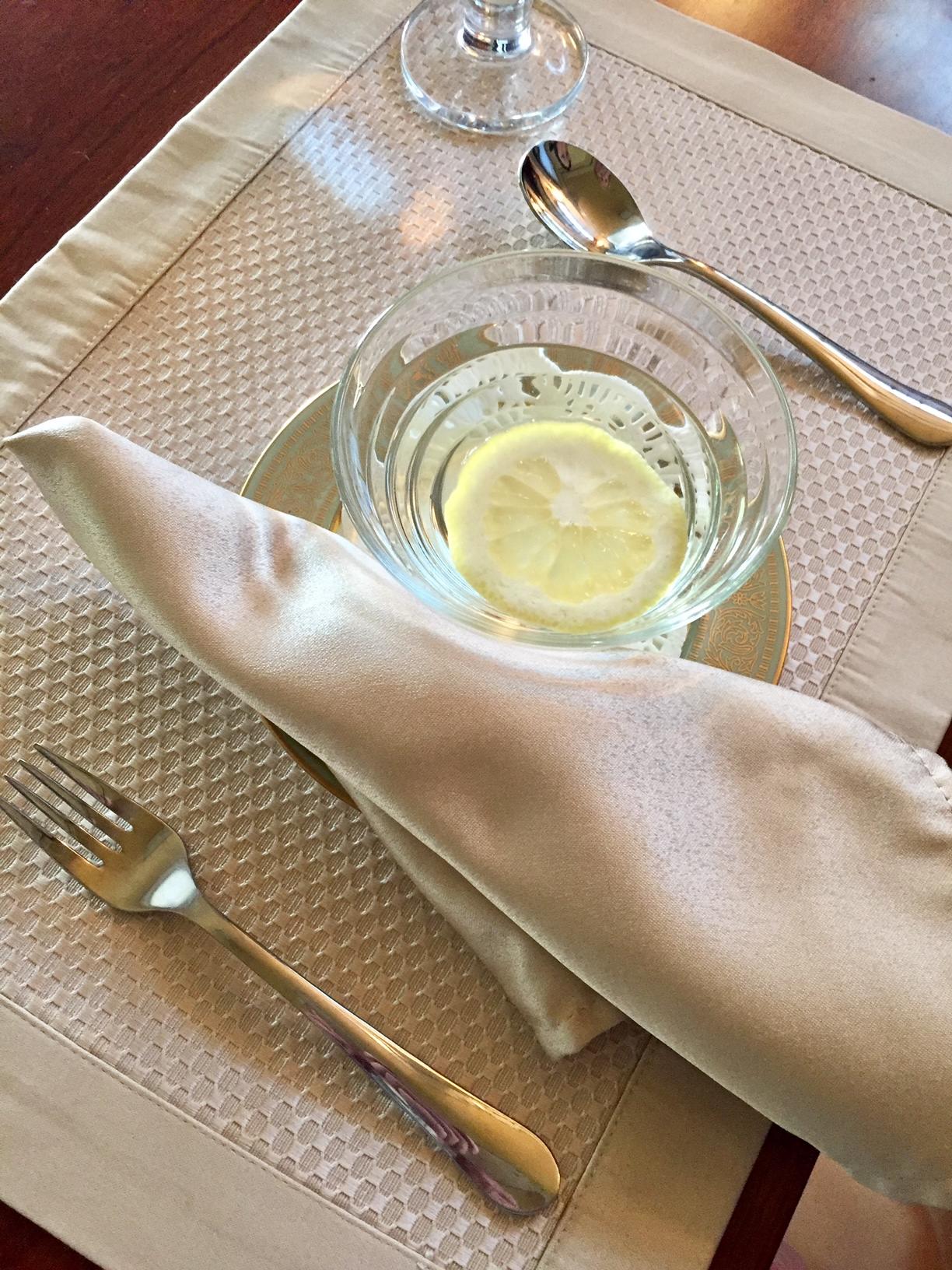
Image result for finger bowl images
To understand the snobbery of this breed of Butler, let me tell you about something that happened one day. I was informed at about 10 am that the Tahsildar (a District Administration officer) was going to come to the estate to check on some land matters. I was to give him lunch at my bungalow (most estates had no guest houses or hotels and so all official guests had to be entertained at home for which managers were paid some token amount). So, I drove my old Royal Enfield Bullet, kept running mainly due to the daily attention of Thangavelu the mechanic, up to the bungalow and said to Bastian, “Bastian, the Tahsildar is coming for lunch so please make some extra lunch.”

“O God, Master!” said Bastian.

“What happened? Why are you O Godding, Bastian?”

“Master, I had planned to make fish in white sauce for Master,” said Bastian.

“So just make some more, Bastian!” I said with some impatience.

“Unh! What that man know about white sauce!” snorted Bastian.

So duly, rice and Sambar with two other curries was made. At the end of the meal, Bastian in his usual style, produced crystal finger bowls with warm water and a small slice of lemon on the edge. The Tahsildar, who naturally knew nothing about finger bowls and who came from a place (Pollachi) where people drink warm water, squeezed the lemon into the water and drank it up. As soon as he left there was Bastian with a big grin on his face telling me, “See Master! What I told Master about that man?”

The interesting thing in this story is that the standards that Bastian exemplified were the standards of the British, taken from their culture. The Tahsildar was actually a man who came from the same culture as Bastian himself, yet Bastian identified with and got his own sense of significance from the standards of the British rather than from his own people. The power of indoctrination and identification with the ‘ruling class’ was very visible in plantation society where the culture of the White Sahibs was very much alive and followed to the T by their successors, the Brown Sahibs.

Not to say that all these standards were bad. Not at all. Many of them referred to manners, ways of dealing with subordinates with fairness and dignity, the importance of appearance and presentation and the power of the ‘Covenant’ that made the managers ‘Covenanted Staff’ as against all the other staff who were called Non-covenanted. But there was also the element of superiority of race, caste, and more importantly, class. Social class.

Is this your first visit here? Welcome to Indian Chai Stories!
Do you have a chai story of your own to share? Send it to me here, please : indianchaistories@gmail.com. 

My name is Gowri Mohanakrishnan and I'm a tea planter's wife. I started this blog because one of the things that I wouldn't want us to lose in a fast changing world is the tea story - a story always told with great seriousness, no matter how funny - always true (always), maybe a tall tale, long, or short, impossible, scary, funny or exciting but never dull.
You will find yourself transported to another world! Happy reading!
Cheers to the spirit of Indian Tea! 


Meet the writer: 

Mirza Yawar Baig. President, Yawar Baig & Associates (www.yawarbaig.com). Business consultant specializing in Leadership Development and Family Business Consulting. Was a planter from 1983-93 in Anamallais and Kanyakumari. Author, mentor, photographer, speaker, inveterate traveler. Working across boundaries of race, religion and nationality to bring hearts together. I was in tea for seven years and in rubber for three. Also planted coffee, cardamom, vanilla and coconut.

Friday, June 7, 2019

The Water Diviner

by Aloke Mookerjee
Aloke has shared a number of stories here on Indian Chai Stories. You'll find a link to these at the end of the page.
'I have another 'tea tale' for you', writes Aloke. 'This time it is in Assam, when I took over Borjuli T E as Manager. I was there for eight years!The story I tell here is true in every detail.'

Image result for water diviner stick
Back in 1976, two years into what would become a long tenure at Borjuli, I realized that an additional tea nursery was needed to accommodate a greater number of plants required to meet our planting targets of the coming years. Thus, along with my assistants, I went around the estate in search of a suitable site. Sooner than expected, we located a plot of level fallow ground, not far from the estate office and the garden assistant’s bungalow alongside the main tarmac road leading to Rangapara town. Its convenient location would allow for close supervision – a critical requirement for raising a nursery of healthy plants.

The North Bank area of Assam, where Borjuli is located, is a drought prone belt in this land of copious rains. The few showers that occurred after the monsoons had receded were too unpredictable to rely upon. Irrigation of the nursery and the ‘young tea’ was therefore essential, and already an established practice here. The need to locate a water source nearby therefore became a critical issue for the success of our nursery in the newly found site.

Apart from the Borjuli nadi flowing through the eastern edge of the estate, water for our irrigation systems was drawn mainly through bore wells from subterranean reservoirs. Local contractors were incapable of boring more than a depth of twenty feet or so. In any case, this was the deepest we could have gone what with the finances available in the estate budget. The cost of boring deeper wells, being considerably higher, would have needed the approval of the head-office which I knew, would not have passed. It therefore became imperative to discover a spot close enough to the nursery site where adequate water would be available in the shallow subterranean strata – a tricky proposition. We would need surely ‘Lady Luck’ for such an outcome!

My assistant, Subrata ‘Bacchu’ Bhattacharya (may his soul rest in peace) suggested ‘water-divining’ as a means to locate a water source here. Quickly adding credence to my doubtful response and before its outright dismissal, he reminded me of an incident when our erstwhile Visiting Agent, Bill Morrison (as a Manager) had accurately discovered a viable ground water reservoir through in his estate by ‘water divining’. It earned him a lofty reputation of being a ‘Water Diviner’ – a seemingly obscure gift that, I gathered was apparently inherent in only a few ‘select’ individuals. But with Bill retired and back in Scotland, no one else was known to possess this esoteric skill. I was now persuaded to try my hand at it.

Occasionally, people on the main road passing by stopped to watch me with curiosity. ‘Johnny Walker’ could not have been any prouder of my resolute strides as I repeatedly reminded myself to ‘Keep Walking’!

So, what did this ‘skill’ entail? Bill Morrison had evidently explained all in some detail to Bacchu some years back and he now educated me of the procedure. For a successful outcome, a ‘Y’ shaped branch, not too green and pliable nor too old and woody was needed first. I was to then hold on to the two arm ends of this branch at waist height and spread them out with the third arm pointing straight ahead and parallel to the ground. Holding the branch thus, I was to walk over any selected site and hopefully locate a pool of water hiding somewhere beneath my feet! If ‘Lady Luck’ decided to smile and I did stumble upon such a pool, the third arm of the ‘Y’, I learnt, would be pulled down by a kind of a magnetic force. The force of the pull would depend on the quantity of available ground water. Having heard all this and with nothing to lose but a bit a time and energy, I agreed to ‘give it a bash’. My ‘team’ rushed about and before I could change my mind, a perfectly suitable branch from a nearby Indigofera Teysmanii tree was found, cut to shape and handed over to me.

With head full of my newly acquired knowledge of dubious authenticity, I began my walk with the two branch ends of the ‘water divining device’ held firmly in the fists of my hands. I strode systematically in straight lines, along the entire length of the plot, starting from the north-east corner. Occasionally, people on the main road passing by stopped to watch me with curiosity. ‘Johnny Walker’ could not have been any prouder of my resolute strides as I repeatedly reminded myself to ‘Keep Walking’! Sadly though, my resolve seemed to have little effect. In time I had, almost entirely covered the plot, yet the branch in my hands remained a lifeless piece of wood. My hopes were rapidly waning and I was ready to give up this futile exercise.

With such gloomy thoughts flashing, I finally reached the last stretch in the south west corner. As I stepped on to this bit of the land, the branch in my hand suddenly seemed to wake up with a gentle tug! Did it really happen, I wondered, or was it just my wishful imagination? Not so, the branch had actually moved for at my very next step the tug got stronger in its downward pull and with my third step, I could barely hold back its force. The third end of the ‘Y’ had now dipped down to point vertically down at my feet and pulling with such force as to almost tear itself out of my clenched fists. Incredible as it may seem, even my strongest effort to bring the branch back to its original horizontal position failed. Excitement erupted all around and we quickly marked the spot on the ground, where the branch was pointing.

Sobered soon after the initial euphoria, doubts of my newly discovered ‘power’ were beginning to creep in. I needed to make sure this curious experience really carried substance. I got both Bacchu as well as my ‘Jamadar Babu’* to try their hands at it. Strangely enough, however much they tried, there was no downward pull of the branch in their hands at the marked spot. And yet with the branch back in my hands, the strong magnetic pull would unfailingly return.

On the basis of this rather mystifying experience, we felt justified to complete our venture. Boring at the marked spot began the next day and pipes inserted into what did indeed turn out to be a new underground reservoir that gushed out water continuously for all the years I was in Borjuli. I had discovered our water source! And with it, earned my ‘Brownie points’ to become the second confirmed ‘Water Diviner’ in Empire Plantations living to tell the tale!

I never needed to test my perplexing prowess again. Do I still possess this ‘gift’? Who knows? But more importantly, after forty plus years, I wonder if my wonderful and very successful nursery, where it all began, still exists!

*Jamadar Babu - the garden clerk

Is this your first visit here? Welcome to Indian Chai Stories!
Do you have a chai story of your own to share? Send it to me here, please : indianchaistories@gmail.com. 

My name is Gowri Mohanakrishnan and I'm a tea planter's wife. I started this blog because one of the things that I wouldn't want us to lose in a fast changing world is the tea story - a story always told with great seriousness, no matter how funny - always true (always), maybe a tall tale, long, or short, impossible, scary, funny or exciting but never dull.
You will find yourself transported to another world! Happy reading!
Cheers to the spirit of Indian Tea! 


Meet the writer: Aloke Mookerjee


Here's what Aloke has to say about himself : 'Long retired from tea, but still active in business. Even after all these years, tea remains to live strongly in my thoughts; they were the best years of my life. Other interests? Always loved Jazz music - still do and have written about this incredible genre. Love vintage airplanes (thus my love for Dakotas!) and cars, and intend to make this my next focus.'  Here is the link to all posts by Aloke - Stories by Aloke Mookerjee

Aloke has recently published a book, The Jazz Bug, which is available on Amazon. Read about it here: https://notionpress.com/read/the-jazz-bug?fbclid=IwAR2HjxSU2rY6sq5cX_lzBxJY5oat1i_Z22qKdRRP1Tm77Dqp48B2CAlnGvY