Read About Indian Chai Stories

Our Writers - in Pictures!

Tuesday, March 10, 2020

The Ssssnake man of Pannimade

by Rajesh Thomas

Prelude : This piece was the first one in which I had put my thoughts on paper - after repeated attempts by three of my close friends to make me write. It was published in my annual family in house magazine “Stars & Sands". Later on, after it got published, I refined the article further and made the end a bit more interesting. 
In case my relatives are wondering if it is the same story, yes it is, but please do read on; the ending is different!!

Let me start with a disclaimer. As much as this story is about snakes, it is also about one of the many fascinating and colorful characters that I have come across in the plantations. This said, many of us have a deep aversion for snakes. Even a lone elephant, late at nights on the motorcycle at has not scared me as much as snakes do. Coincidentally, almost everyone hates snakes but almost everyone has a snake story to relate.

I had just taken charge of an estate named Pannimade (The estate for the most part of the year was perpetually covered in mist and hence the Tamil name “Panni & Medu” meaning mist covered mountain) in the Annamallai hills. It was a very pretty estate comprising of small rolling hills and situated on the banks of the Sholayar dam. Incidentally, when the dam was built, it submerged almost half the estate.
Athirapally falls. Pic from the Native Planet website

On the western side, bordering the estate was the thick verdant evergreen rainforest of Chalakudi which was infested with leeches and elephants. A single track ghat road wound its way down to the plains of Kerala passing by the picturesque Athirapally falls. An interesting feature of this road was that all the  milestones used to be painted black to prevent elephants from uprooting them. Elephants have a deep aversion to the colour white, especially in the dark, including white colour cars.

So there in this estate lived a worker named Thangavelu, whose claim to fame was his expertise at catching any snake, both venomous and non-venomous. Hence he was bestowed the title “Pambu Thangavelu” by his fellow workers.

"Pambu" means a snake in Tamil. I had heard many a tale about him from my colleagues when I had worked in the nearby estates. So after I had moved in, I was keen to meet him and one of the first things I did was to send for him. To my surprise, he was nothing like the snake catchers one sees on National Geographic or Animal Planet. He was an old man in his mid-fifties about five feet eight inches tall, dressed in khaki shorts and cotton shirt with a turban adorning his head.
The Pannimade snake man. He is seen here with a pair of common spectacled  cobras. The photo was taken on the lawn of the Pannimade Assistant managers Bungalow. Pic dated approximately 1992/93,  was taken and sent to me by my first manager Jose Thomas who was posted in Pannimade in those years.
At first sight, one could not discern anything special and it was actually a bit of a letdown as I had expected someone more imposing. As he greeted me politely, I started asking him about snakes. Slowly as the ice was broken I found out that he did indeed know a lot about snakes and their habits. The Field Officer who was with me asked him to catch a snake and show it to me.

I was a bit surprised by the instruction and I was wondering where he would catch a snake all of a sudden. Promptly Pambu Thangavelu disappeared into the tea field telling us to wait for about fifteen minutes. He reappeared after fifteen minutes with a common rat snake demurely coiled around his arm. He very proudly announced that it was a female (which incidentally I had no intention or means of checking, and had to believe his judgment).

The snake actually appeared shy and wouldn’t want to look at any one of us in the eye. And every time it tried to uncoil itself he would gently admonish it in Tamil like saying “Ai enge porai, suma iru” ( where are you going & keep still ) and the snake would obey him immediately. After about ten minutes he let go of the snake and looked beaming at me.It was quite an impressive show put on by the Snake Man and I thought that was the end of the whole thing little realizing that soon I will be witness to a bigger spectacle.
Some days later there was a big commotion in the Factory: a cobra was seen near the workers' restroom. The snake was chased and followed by some of the factory workers into a hole in a stone revetment (a wall made by loose stone rubble without cement to prevent embankments from falling).

Promptly the Snake Man was sent for and he arrived on the scene. Without wasting time the master started to work. He started to dismantle the stones near the hole where the cobra was last seen. Soon enough the cobra's head was seen. Incidentally, I realized that one of the old adages about a snake entering a hole, turning around and withdrawing its body behind was actually true as the cobra was facing the crowd. Now I thought that seeing itself cornered by the crowd, the cobra would lash out and try to escape and I among the crowd was preparing to put on my running shoes.

The crowd of estate workers had obviously seen the master in action, had full faith in him and were watching him confidently without moving from the spot. Then I realized that not only Pambu Thangavelu’s attire and personality was different from what I had seen on the television nature channels, his style of 'catching' was also different. He grabbed hold of a thin stick - the thickness of an average man's little finger - about one and a half feet length (none of the fancy Tongs which we see on television) and admonished the snake in Tamil like a stern schoolmaster admonishing his pupil.

The cobra literally cowered underneath that wisp of a stick and tried to get away. He then casually caught it and dragged it out of its hole. The cobra all the while did not try to be aggressive or try to escape. It was strangely submissive and obeyed him all the time. He kept talking to the snake in Tamil: at times he would admonish it and at times he would talk gently as if talking to a child. I still do not know what effect the talking had on the Cobra as snakes do not have any ears. Then the Snake Man tied a thin coir rope that is commonly called in Tamil as a “sanal kair” to its tail and proudly took it for a walk to the nearest jungle to release it there! The cobra followed him at his heel like a pet dog to the jungle.

After that, I decided that I would put the Snake Man through the ultimate test. The jungles to the west of the estate were supposed to have a sizable population of king cobras so I summoned him and asked him whether he had seen a king cobra and if he could describe it. He replied positively and described it. My next question was could he catch one to show me as I had never seen one. Promptly came the reply, “Yes, give me a few days”.

A few days after that, while I was having lunch I got a phone call informing me that the Snake Man was waiting for me at the Assistant Manager's Bungalow ( which was unoccupied then) with the prize catch - a king cobra. I rushed there and waiting there was the Snake Man holding a king cobra – tied with a string. As usual, as soon as the snake saw us it raised its hood and rose with a hiss. Then the Snake Man reprimanded the snake in Tamil, “Ai Sumu iru, Satham Podathey” ( keep still & don’t make any noise ) and waved his stick and the snake just slunk behind him.

After watching the show for some time we released it back in the jungle. I was also anxious that no damage comes to the snake, as the king cobra comes under the Schedule 1 animal in the endangered list of the forest department. Schedule 1 is the list of animals given the maximum protection and vice versa also the maximum punishment for killing or disturbing it. On the protection list, the king cobra is on the same status as the tiger or the elephant. So killing one you will get the same punishment as for killing a tiger or an elephant.

One thing that struck me was the king cobra that was very unusual  - different from any other snake I have seen. The eyes showed a streak of intelligence - very unusual in a snake. I had also learned that unlike any other snake they build a nest for laying  eggs and watch over the brood till they hatch.

The king cobra I saw measured nine feet nine inches in length. This I learned is only a mid-size king cobra.

It was amazing to watch how a simple illiterate man could know so much about snakes and the ease with which he handled them without any sophisticated tools. He would also dispense medicines to counter bites from poisonous snakes. He called his native medicines as “Pachai elai Vaithiyam” (a mixture of green herbs as treatment). I understood that they acted as powerful purgatory medicines and they possible purged the poison out of the victim’s body. Personally, I had never met anyone he had treated, so I really could not judge their efficacy.

It was interesting to spend some time now and then with the Snake Man learning a bit about the habits of the snakes and how to avoid them. Even now I marvel at the mastery the little man had over the serpents without any special equipment or fuss. Thanks to him I also came face to face with a king cobra at close quarters.
This is a picture from the estate I work on: Korakundah, Nilgiris. The unique feature of this estate is the elevation.The highest tea on the estate is 8,100 feet above sea level.                                                                                                       
The Snake Man had seen numerous Managers and Assistant Managers come and go in Pannimade and many like me were fascinated by him. It so happened that one Assistant in jest asked the Snake Man if snakes made good eating. I don’t remember what the Snake Man’s reply was but promptly that evening he was at the Assistant manager’s bungalow with a fresh rat snake.

This Assistant was taken back in surprise at this sudden gift didn’t know how to respond. He decided that the best thing was to share it with the Assistant in the nearby Malakiparai Estate. So he made the Snake Man clean the rat snake, got it cut into pieces, wrapped them up then jumped onto his motorcycle and he was off to see his pal to share the treat.

The Malakiparai Assistant was apprised of the circumstances and the pros and cons and possible after effects of eating the snake meat was discussed and Dutch courage summoned after a couple of shots of rum, it was decided to go ahead with partaking this slithery snack.

The cook was promptly summoned and given the parcel of meat to be fried. The cook after reaching the kitchen realized what meat it was and came running back to the drawing room and when he realized that the young masters were actually intent on eating the serpent, he thought they had gone insane.

Serious conversation between the cook and the house boy could be heard emanating from the kitchen, discussing the mental health of the Assistants.

Meanwhile, they downed a few more shots of rum awaiting the “snake” (snack).

Finally, the cook came in with the scaly delight and the Assistants promptly helped themselves generously and took the first bite. It didn’t seem too bad so the first plateful vanished swiftly.

It was then they noticed that the cook had not left the drawing room and was standing near the doorway and staring at them in disbelief. A brainwave hit both of them. In unison, they started to flicker their tongues in and out like a snake and rose out of the sofas loudly hissing. At which the cook dropped the empty tray and fled to the kitchen screaming in fear.

And that was the day’s entertainment.

Meet the writer:
  Rajesh Thomas introduces himself:
"A second generation planter. Born and grew up in the planting districts of Southern India. Started my career in the High Ranges and Annamallais Planting Districts for twelve years. Had a stint in Africa for two years. Since 2009 been planting in the Nilgiris.


Read all of Rajesh's stories at this link: https://teastorytellers.blogspot.com/search/label/J.Rajesh%20Thomas

ADD THIS LINK TO YOUR FAVOURITES : https://teastorytellers.blogspot.com/Indian Chai Stories.
Happy reading! Cheers to the spirit of Indian Tea! 
 Is this your first visit here? Welcome to Indian Chai Stories!
Do you have a chai story of your own to share?  

Send it to me here, please : indianchaistories@gmail.com. 

My name is Gowri Mohanakrishnan and I'm a tea planter's wife. I started this blog because one of the things that I wouldn't want us to lose in a fast changing world is the tea story - a story always told with great seriousness, no matter how funny - always true (always), maybe a tall tale, long, or short, impossible, scary, funny or exciting but never dull.
 Happy reading! Cheers to the spirit of Indian Tea!

Saturday, March 7, 2020

Back in the Day – Part X

by Shipra Castledine

It has been a while since my last chapter. I had the good fortune to spend three months holidaying in India so my silence can be excused!

My last chapter stopped at a big holiday spent in Baintgoorie TE with childhood friends and relatives. Soon after that trip my father left Duncans Tea and he moved to Kolkata too. However my days in tea do not end there. I have spent a great many years as part of the tea industry. When my mother and myself moved to Kolkata at the start of 1967 we kind of lost touch with tea people and got busy in our city lives with my being enrolled in Loreto House, Kolkata. What a change it all was! Even after my father moved to Kolkata we somehow did not meet many tea people. There were a few close friends of my parents who were ex tea planters and we would socialise with them but that was about it.

The next time I met a number of tea people was when I was studying in college and we were invited at the last minute to my friend from Rungamuttee TE in the Dooars, Dora Roy’s wedding. My parents and I caught up with the Roys then at the wedding and soon after Tubloo (KK Roy, Dora’s brother) started dropping in at our place. That was 1974. One thing lead to another and Tubloo and I decided to get married. Our parents weren’t hugely enamoured of the idea as both of us were too young, but the families were well known to each other and the marriage happened in 1975.

After a couple of years working for Liptons in Kolkata, Tubloo was offered a job with a tea broking firm, Creswells, with a transfer to Siliguri where tea auctions had started. By this time we had a baby, our elder daughter Pompom (Anupa). Tubloo was ecstatic with the posting as it meant we could go live with his parents PK and Geeta Roy who had retired from Rungamuttee TE and built a house in Bengdubi, near Bagdogra, North Bengal. Times were turbulent in our lives in those years. We soon had another baby, Pixie (Anindita, our second daughter). And we moved to our own place in Siliguri. Whilst in Bengdubi we would sometimes visit Terai Club which was the tea club of the district. The socialising was pleasant in the club though it was not as active as some of the tea clubs in the Dooars. We carried on socialising at Terai Club whilst living in Siliguri.

As Tubloo’s job naturally took him visiting tea estates in the Terai district and the Dooars we became friendly with a lot of tea planters. Now started a time where my daughters got familiar with a tea planter’s life.

How they loved their visits to the tea estates. We would visit Dalsingpara TE and be hosted by Ron and Roma Circar. How they put up with the whole jing-bang lot of us including our major domo Margaret (children’s ayah) I wouldn’t know! We enjoyed our time with them immensely. One of our trips to them resulted in us picking up a gorgeous black Labrador puppy as their well bred Labradors would breed almost every year. In our time with the Circars we got to know Ozzie and Chinny Lobo too. Ozzie was Manager, Dalsingpara TE. All of them were / are wonderful people.
dalsingpara.jpg
I think this is the driveway to the Manager’s Bungalow, Dalsingpara TE
It would be hard to name how many planters we became friends with. Another bungalow we visited very often was in Leesh River TE. An assistant, Niraj Verma. He was a bachelor in the days we piled on to his bungalow too. He would make us all so comfortable. He would visit us in Siliguri too and I will never forget how much Niraj liked Bengali fish! He would eat Pabda, Bata, Illish and any variety of fish that Bengalis eat with such relish and real love of it. In fact we had a number of non-Bengali friends who would come to our place to have a huge meal of Illish Maacher Shorshe Bata! We gained a reputation for being hospitable and everyone knew we loved to entertain and feed people!

The good fortune of living in Siliguri gave us the delights of being able to travel the mountains around us. Going on day trips to Darjeeling was fairly common. The minute we started climbing the hills we would all feel ravenously hungry, barely being able to wait till we got to Kurseong where we would have a delicious breakfast at the Kurseong Tourist Lodge. We visited many hill stations whilst living in Siliguri. Many parts of Sikkim became familiar as we visited over and over. Kalimpong, always so pretty. The highlight of the mountains was Bhutan. What a country! We were lucky to make 3 trips to Bhutan. A pristine, grand, totally carbon footprint free kingdom. The journey to Thimpu (Bhutan’s capital) from Siliguri was approximately 14 hours. We would drive to Dalsingpara TE and stop over for the night.

The next day we would make the 10 hour drive to Thimpu. We had a big car, a Contessa which was sort of like the old Studebakers. I would fill in the space between the back seat and front seat with suitcases or boxes that would fit snugly in so I could then put a thick blanket over the entire back seat and the suitcases which created a bed for the girls. The first time we travelled up to Thimpu the car just did not want to move up in the Bhutan mountains! Between Phoentsholing, the entry township to Bhutan in the plains and Thimpu there was not a single car garage, petrol station or mechanic! We arrived in Thimpu with the car panting and puffing! And it happened to be a public holiday in Thimpu so not a mechanic available! Well, thankfully one of our friends who accompanied us had some Bhutanese friends. They called on a mechanic and it turned out that we had driven all that vast distance with not a hope of help, on a cracked carburettor cap! It was an adventure for sure!

way to bhutan.jpg
The road through the Dooars to Bhutan
road to thimpu.jpg
Above, a typical stretch on the road to Thimpu
thimpu.jpg
Thimpu
We became close to other tea planters who were in the Terai district. One of those families have continued to be my close friends. They were the Ghaffars and Aman Ghaffar was Manager at Hansqua TE that was at Aman’s time owned by a proprietor and not one of the tea agency companies such as Goodrickes or Duncans. The senior Ghaffars, more Aman Ghaffar than Dipi his wife, actually knew my parents when Dad was a tea planter and Aman would have seen me as a child. And then us Roys, Tubloo, my daughters and myself, as a family, got friendly with the senior Ghaffars. I graduated soon to the junior Ghaffars as I was sort of in between age-wise!

We spent many days in each other’s company and those ties in the 1980s have created bonds that have lasted. We share so many memories together that when we get together today the feelings are of familiarity and deep affection. All of us have our life stories but we inherently know each other for what we are. Dipi was from the old style of tea planter wives and her hospitality was outstanding. She and I share a common love of food and her table would be so grand and mouth-watering. And another thing about Dipi is her generosity. Throughout the years when we lived in reasonably close proximity Dipi would drive in to our house in Siliguri from Hansqua TE which was about 20km away and a basket of fresh vegetables from her malibari would be offloaded to us! I can still see the beautiful, just picked cauliflowers, shiny eggplants, young cabbages, radishes and so much more that we would enjoy cooking and eating for days after.
hansqua.jpg
Hansqua TE
 We were truly lucky to enjoy an unpolluted environment with the beautiful tea estates anywhere we looked and that we visited and the quality of produce and food that we availed. I would drive almost 30km to a poultry run by Catholic priests (we knew the priests) and pick up fresh eggs and undressed chickens. On a haat (market) day I would visit mainly Salugara Haat to pick up kilos of the most gorgeous pork we have ever had. I became well known for my pan bbq-ed pork rib chops! They were known by our friends as PC-s! The Illish we have had in Siliguri could rival the best of what you could get in Kolkata!

I will never forget a lunch we had where our dining table was full with more than 10 of us at the table. Lunch went on for a couple of hours as the men (as I mentioned before, non-Bengalis) devoured piece after piece of shorshe illish! Each one of them would have had more than 4 pieces each! I had to cook up fresh rice as they ate so they could keep enjoying the illish maach! Once done with the meal I began slicing chilled langraa mangoes. Oh my God! They went down like our friends had never eaten mangoes before! I had just the day before shopped 5kg of the mangoes. Every one of them was sliced and was polished off! Of course the standard of the mangoes was top class. And I used to rustle up desserts with the most gorgeous fresh cream from an army dairy in Bengdubi! You could say it was quite a life of decadence!

On that salivating note recalling the quality of food we enjoyed in our Siliguri days I leave you till the next chapter.


 Meet the writer: 'My name is Shipra Castledine nee Shipra Bose (Bunty). My parents were Sudhin and Gouri Bose. I am a tea 'baba' of the 1950-s era. I spent a part of my life growing up in the Dooars and another large part of my life married to a tea planter's son the Late KK Roy son of PK and Geeta Roy of Rungamuttee TE in the Dooars. I continued to be in the tea industry for many years as KK was a tea broker till he passed away in 1998.' Shipra recounts her childhood in the Dooars and her school days in Darjeeling in a series called 'Back in the Day' of which Part VII went up in August. Read all Shipra's posts here: https://teastorytellers.blogspot.com/search/label/Shipra%20Castledine

Is this your first visit here? Welcome to Indian Chai Stories! 
If you've ever visited a tea garden or lived in one, or if you have a good friend who did, you would have heard some absolutely improbable stories! You will meet many storytellers here at Indian Chai Stories, and they are almost all from the world of tea gardens: planters, memsaabs, baby and baba log. Each of our contributors has a really good story to tell - don't lose any time before you start reading them!
Do you have a chai story of your own to share? Send it to me here, please :
indianchaistories@gmail.com. My name is Gowri Mohanakrishnan and I'm a tea planter's wife. I started this blog because one of the things that I wouldn't want us to lose in a fast changing world is the tea story - a story always told with great seriousness, no matter how funny - always true (always), maybe a tall tale, long, or short, impossible, scary, funny or exciting but never dull. The blog is updated every two to three days. You will find yourself transported to another world! Happy reading! Cheers to the spirit of Indian Tea!  
ADD THIS LINK TO YOUR FAVOURITES : https://teastorytellers.blogspot.com/Indian Chai Stories

Tuesday, March 3, 2020

Teatime in Tajikistan

by Sarita Dasgupta

Anytime is teatime in Tajikistan! I discovered this when I stayed with friends in Dushanbe, the capital of Tajikistan, in September-October 2016. Incidentally, the nation had completed twenty-five years of Independence on 9 September, so Dushanbe was in a celebratory mood. The streets and parks were lit up at night, and I noticed that the colours on their flag were the same as on ours!
At the statue of A.A.Rudaki
Like in the whole of Central Asia, tea is the most popular beverage in the country. Every meal begins and ends with a cup of tea, and the brew is drunk throughout the meal as well. Green tea is known as ‘kabood’ or ‘zeliony chai’ and tea with milk is called ‘shir chai’.

This universal habit of tea drinking is responsible for the tea stalls and stands in places like Hissor Fort which are frequented by locals and tourists alike, and the popularity of the tea house – the ‘choykhana’ – where people gather over cups of tea and snacks like ‘sambusa’ and ‘shashlik’, exchange pleasantries, and watch the world go by.
 Choykhana Rokhat
The oldest ‘choykhana’ in Dushanbe is the open-plan Choykhana Rokhat. It is an attractive place with columns, decorated ceiling and a grand staircase. Tables are set along a gallery which overlooks the main street – Rudaki Avenue. (Here I must mention that this extremely long, central street, as well as a beautiful park located on it, are named after the 9th century CE Tajik poet, Rudaki, considered to be the first great literary genius of the modern Persian language.)

Choykhana Rokhat has an indoor restaurant as well, which has beautifully carved wooden pillars holding up an ornately carved and painted wooden ceiling. Musical evenings are held outdoors in pleasant weather, and sometimes weddings too. I met a retired government official, nattily dressed in a suit, tie and Tajik hat, proudly sporting his decorations, and drinking a leisurely cup of tea with his friends. He was curious to know where I came from, and when told that I hailed from India and that I had spent most of my life on tea estates, he happily took a photograph with ‘the lady from Hindustan who grows tea’! (It would have been too tedious – and probably lost in translation- to explain that the nearest I’d come to growing ‘tea’ was nurturing camellia plants in pots and drums, so I let it pass.)
With a Tajik gent at Choykhana Rokhat
The Choykhana Saodat, also on Rudaki Avenue, is newer and less frequented, I found. Although different from the Choykhana Rokhat, it too has a decorated ceiling with a beautiful chandelier, and a fountain in the front courtyard.

The newest and grandest Choykhana in Dushanbe is the Kokhi Navruz, situated near the Hyatt Regency Hotel on Prospekt Ismoili Somoni. (Somoni was another larger-than-life figure who ruled the area around Afghanistan, Tajikistan and Uzbekistan in the 9th century CE. The Tajik currency is named after him.) Kokhi Navruz was recently completed and although the restaurant hadn’t started business when I was there, one could go on a conducted tour of this magnificent building. The decorated ceilings, chandeliers, cupolas with paintings of eminent Tajiks, fountains and lake give it an air of grandeur more in keeping with a palace than a tea house! Although, tea is worthy of being drunk in a palace too!
Choykhana Kokhi Navruz
Interestingly, there is a very popular ‘choykhana’ at the Palais am Festungsgraben in Berlin (Germany) called the Tajikistan Tearoom. After being displayed in the Soviet Pavilion at the Leipzig Fair in 1974 (when Tajikistan was The Tajik Soviet Socialist Republic and still a part of the Soviet Union) it was donated to the Society for German-Soviet Friendship and moved to its present location.

Tea drinking is a centuries-old practice around the world. It has a rich history and, in many countries, it is steeped in tradition. In the Central Asian countries like Tajikistan, tea is more than just a drink that quenches thirst – it is a basic necessity! They believe that “teatime doesn't end when the pot is empty; you carry it in your heart.”
Lunchtime is tea time!


Meet the writer:


"As a ‘chai ka baby’ (and grandbaby!) and then a ‘chai ka memsahab’, I sometimes wonder if I have tea running through my veins! 

I have been writing for as long as can remember – not only my reminiscences about life in ‘tea’ but also skits, plays, and short stories. My plays and musicals have been performed by school children in Guwahati, Kolkata and Pune, and my first collection of short stories for children, called Feathered Friends, was published by Amazing Reads (India Book Distributors) in 2016. My Rainbow Reader series of English text books and work books have been selected as the prescribed text for Classes I to IV by the Meghalaya Board of School Education for the 2018-2019 academic session, and I have now started writing another series for the same publisher.

Have you read all of Sarita's stories on this blog?
Click here:  https://teastorytellers.blogspot.com/search/label/Sarita%20Dasgupta

Is this your first visit here? Welcome to Indian Chai Stories! 
Do you have a chai story of your own to share? Send it to me here, please : indianchaistories@gmail.com. My name is Gowri Mohanakrishnan and I'm a tea planter's wife. I started this blog because one of the things that I wouldn't want us to lose in a fast changing world is the tea story - a story always told with great seriousness, no matter how funny - always true (always), maybe a tall tale, long, or short, impossible, scary, funny or exciting but never dull. You will find yourself transported to another world! 

 
Happy reading! Cheers to the spirit of Indian Tea!

ADD THIS LINK TO YOUR FAVOURITES : https://teastorytellers.blogspot.com/Indian Chai Stories

Wednesday, February 12, 2020

Cakes & Curry Puffs

by Aloke Mookerjee
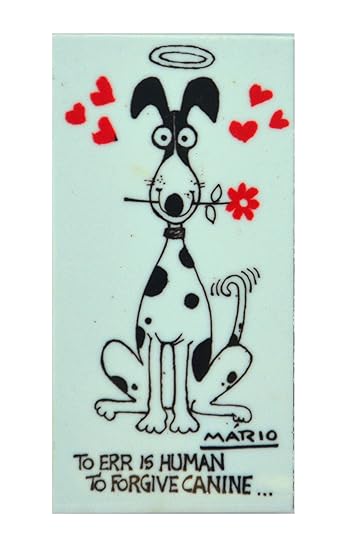
This piece was written a long time back. A recent short trip to Goa during which a visit to the lovely ‘Mario’ shop in Candolim where amongst all the wonderful Mario Miranda themed items, was a picture of a lovable dog holding a flower by the stem between its teeth. Its caption was so very appropriate to my article that I felt the urge to include it.
Image result for TO Err is Human, to forgive, canine mario miranda
Ghatia Tea Estate, bordering Bhutan in the Dooars was, at that time, a small compact plantation of 900 acres with a well laid out factory that boasted of two functional gates – the IN and the OUT! Not to be outdone, the factory building also had its own two entry/exit doors; one at the drying room and the other at the rolling room.

As the 'KAMJARI SAAB' of Ghatia, I was required to be at the office in the afternoons after my field work, to dispense with the day's paper work and dole out the minor 'bichars'* to workers who appeared before me after having escaped the Burra Saab's severe growls and snarls! Through all these proceedings my yellow Labrador Tippy would remain quietly by my side.

Having dispensed with the chores, I would walk down to the factory, with Tippy following at heel, and enter the premises through the drying room door. On my instruction, Tippy would sit outside and wait for me to reappear which I invariably did from the same door. We would then walk back together to the bungalow for the now long gone ritual of evening tea in the veranda!

One balmy October evening, after completing my office work, I entered the factory, with Tippy, as usual, sitting and waiting outside the drying room door. Inside, engrossed in an animated (and typically irrelevant) conversation with the 'Kal' Saab (as the Mistry Saabs in the Dooars were known as) I forgot my devoted dog and left for my bungalow by exiting through the rolling room door.

In the bungalow veranda, the vintage trolley pushed on by my vintage bearer creaked out laden with the pot of tea, cakes and curry puffs. After the busy work day, peace and quiet prevailed. A feeling of well-being was seeping through me gently while relishing the spread prepared by the old ‘Mog’ cook (I seemed to have specialised in old and dated house help!). Despite the tranquillity in the air all around, a feeling of something amiss kept nagging me.

Over my second cup and curry puff, the nagging suddenly yielded results and the benign mood jolted on realizing that my drooling and lovable Labrador by my side was missing! I left my tea instantly and rushed out fearing the worst – that she might be lost, wandering and desperately looking for me. I headed quickly, first for the drying room door where I had last left Tippy waiting.

I needed to look no further for there she was still sitting in exactly the same position as I had last seen her, only now with a distinctly forlorn gaze at the door! Ecstatic at the sound of my urgent call and appearance, she bounded up jumping all over me as we quickly began our walk back with her romping by my side in doggy delight.

Back in the bungalow, Tippy earned a well-deserved extra share of cakes and curry puffs that evening. Elated by the larger than usual helping of the delectable treats, I was happily granted a full pardon and my serious (never to be repeated) sin quickly forgotten.

Tippy lived on for many more years greedy for ripened bananas, curry puffs and cream cakes. She now lies in peace under a luxuriant (still the same I hope) Mary Palmer in the compound of the Borjuli Burra Bungalow in the North Bank of Assam.
Is this your first visit here? Welcome to Indian Chai Stories!
Do you have a chai story of your own to share?  

Send it to me here, please : indianchaistories@gmail.com. 

My name is Gowri Mohanakrishnan and I'm a tea planter's wife. I started this blog because one of the things that I wouldn't want us to lose in a fast changing world is the tea story - a story always told with great seriousness, no matter how funny - always true (always), maybe a tall tale, long, or short, impossible, scary, funny or exciting but never dull. There are over 120 stories of tea life here, all written by people who have lived in tea gardens. 

Add this link to your favourites: https://teastorytellers.blogspot.com/ 
Happy reading! Cheers to the spirit of Indian Tea!
 
Meet the writer: Aloke Mookerjee

Here's what Aloke has to say about himself : 'Long retired from tea, but still active in business. Even after all these years, tea remains to live strongly in my thoughts; they were the best years of my life. Other interests? Always loved Jazz music - still do and have written about this incredible genre. Love vintage airplanes (thus my love for Dakotas!) and cars, and intend to make this my next focus.'  Here is the link to all posts by Aloke - Stories by Aloke Mookerjee

Aloke has recently published a book, The Jazz Bug, which is available on Amazon. Read about it here: https://notionpress.com/read/the-jazz-bug?fbclid=IwAR2HjxSU2rY6sq5cX_lzBxJY5oat1i_Z22qKdRRP1Tm77Dqp48B2CAlnGvY 


Sunday, February 2, 2020

The Ghost of Carrington


by V.R.Srikanth

Carrington. All pictures by the author
 The area towards the western escarpments of the Nilgiris is often referred to as the Kundahs. More about that later. The westernmost and most farthest estate is Korakundah, where a fellow writer and a good mate of mine, Rajesh Thomas is currently stationed. En route to Korakundah one passes through Thiashola, a tea estate of approximately 190 hectares that formerly belonged to Tea Estates India Ltd., which was a subsidiary of Brooke Bond. The Thiashola marks have for years represented the finest of Nilgiri Orthodox teas.

This story will be in two parts. In this first one here, I will attempt to acquaint you with this beautiful area, and in the second part, I will narrate the story. To the detail minded, one reaches Thiashola from Ooty and Coonoor via Manjoor. It is a total of around 45 kms from both the aforementioned towns.

Thiashola lives up to its name as it gives one the district impression of literally being chiseled out of the previously all pervading shola forests by the early pioneers of the tea and coffee plantation industry towards the mid 18th century. From the Thiashola tea factory at around 1900 metres msl, the road proceeds further up and westward towards the estate boundary for about 3kms as it enters the Thiashola Reserve forest area. About 600 metres further it offers two deviations at a Y junction with the Upper left proceeding towards Carrington ( a division of Thiashola measuring approximately 65 hectares and around 3 kms from that point) and Kinnakorai (which is the last settlement of the Nilgiris on the south west which is about 13 kms from that point). The road on the lower right proceeds towards Korakundah Estate.

The walk or drive from the Thiashola Estate Factory to Kinnakorai via Carrington and our property, Silver Saddle (approximately 10.6 kms from the Y junction and 7.6 kms from Carrington) is perhaps one of the most exhilarating journeys in the Nilgiris and in fact any tea growing area. One climbs from 1900 metres at Thiashola gradually to about 2100 metres at Y junction and Carrington and descends sharply towards Silver Saddle at 1825 metres msl and Kinnakorai at 1700 metres msl.

It is a walkers dream, with sightings - if one is lucky - of Sambhur, Dholes, Malabar Squirrels, Nilgiri Martens, the two big cats, Gaur*, Black Naped Hares, Ruddy and Striped Mongoose, Nilgiri Tahr**, Bonnet Macaques and Nilgiri Langurs. The walk is along a densely forested area inhabited by native shola forests where visibility on both sides of the road is restricted to a few feet on either side through most of the journey. There are spectacular views to be had along the way with a drop to the Kerala foothills towards the west of almost 5300 ft, and the Geddai Valley towards the East of almost the same extent of declivity. The sound of the wind whistling through the trees accompanied by numerous bird calls is constant.

One frequently pinches oneself to believe it is all true and thanks the Creator along the way.
The Kerala foothills, viewed from near Silver Saddle.
Part II

The sound continued for a few minutes and stopped. I started breathing more easily....
Although Thiashola was fairly well known to visitors to the Korakundah and Upper Bhavani area, the division of nearby Carrington was much less so, with visitors to Kinnakorai being the only ones to pass it on a regular basis. That is no longer the case now with bikers and motorists from chiefly nearby Kerala and to a lesser extent tourists from other areas to the Nilgiris, frequently visiting it. However for the major part the area from the Y Junction to Kinnakorai is largely bereft of any human or vehicular presence.

The only connection that residents of Carrington have with the rest of Nilgiris is by the means of buses and other vehicles that pass from Kinnakorai towards Thiashola, Manjoor and beyond. If they miss a scheduled bus, they have recourse to a steeply descending and slippery walk through the shola forest to the Thiashola factory. It is a well worn if not outright dangerous path infested with leeches, slippery rock faces, loose mud and a constantly changing undergrowth. The missed bus at Carrington can be boarded at Thiashola by means of this hazardous 20 minute walk.

The only regular walkers on the road from Thiashola to Carrington, Silver Saddle and Kinnakorai in recent times have been the estate workers, animals and me. In fact I first started doing the walk to Kinnakorai from 2008 onwards when we purchased the property known as Silver Saddle, which was the name given by me to the estate, post its purchase. My wife and I having purchased the property started living in a rented village house in Kinnakorai immediately thereafter. I would on returning from trips to Ooty and Coonoor, hand over my car to my wife at Thiashola and do the 17 km walk to Kinnakorai in the evenings by myself.

Carrington and Thiashola were planted round about the same time in the middle of the 19th century with Carrington having been the place where the first tea bush was planted in 1853, arguably being the first in South India to commercially do so. There is no denying however that Chinese prisoners were used to do this, having been incarcerated there in an open prison called “Jail Maatam,” after initially being brought from China by Clipper Ships, during the Second Opium war and marched up to Carrington from the North Malabar coast. Which brings us to the hero of our story.

I had frequently been informed first hand by amused estate workers that I met en route about the grave dangers that I could encounter on the route and these in the main dealt with passing animals. I have frequently hidden in the shola as herds of Gaur have passed by on more than one occasion and once even watched a pack of dholes*** cross further ahead while thankfully ignoring me. I have also seen wild boar and sambhur**** crossing frequently but fortunately no big cats or elephants.

On an occasion as I paused on a bench at the entrance of Carrington for a smoke break, a worker I used to meet frequently, informed about a ghost that haunted the “Jail Mattam” area or the Carrington Flat as I call it. This involved a distance of about 1 to 1.5 kms from the entrance to Carrington, towards Kinnakorai. I scarcely gave it any thought as I marched along homeward.

Now as a rule I never listen to music by means of an iPod or mobile as I walk. This is mainly to constantly be one with and enjoy the sounds of the jungle. As I covered two thirds of the flat, I could have sworn that I heard footsteps behind me with the odd beating of a stick on the road. I had been for enough walks by then to isolate that distinct sound from others. I paused and looked around to see if it was made by a worker cutting firewood in the surrounding forest or by cattle or its handler. I had a fair idea of the of distance from where the sound was emanating from behind me so although my presumptions of the cause of it could have been ruled out, I still proceeded to wait and observe by way of abundant caution. I observed no one.

The sound continued for a few minutes and stopped. I started breathing more easily despite the fact that I was on a flat path and there ought to have been no cause for even the ‘lightest’ heavy breathing. I still had about a 1 km to walk through in a steeply descending set of hairpin bends interspersed with some straight sections before I passed the southern boundary of Carrington near the second bus stop where I would normally pause for my second smoke and water break.

The noise resumed again after I crossed the first hairpin bend. I could have sworn that there was nobody around as I continued walking after having paused once again. It was getting dark and it was during the period and I was keen on reaching the Saddle early, which was still more than 6 kms away through some really dense forests and one known animal crossing point. The steps with the odd beating of the stick on the road continued and I could have sworn that I felt a tug at the back of my shirt and right sleeve, about 500 metres before the lower bus stop. I lit a nervous cigarette with the dual objectives of calming my nerves and secondly, ensuring that the now christened ‘Mr.Hu,’followed respectfully behind and not anywhere near my sleeves. I crossed the bus stop without stopping and lit another.

I covered the remaining distance to Kinnakorai in an hour which was really good going and proceeded to pour myself a rather stiff whiskey on reaching home. I have frequently encountered ‘Mr.Hu’ on my walks and have managed to calmly accept his presence.

I do greet him from time to time, which although inciting within me a reassuring feeling firstly of comfort and then familiarity, however does no good whatsoever in my self psychological assessment. Happily, I no longer take the support of a cigarette as I have stopped smoking, and also have never since felt a tug. Popular opinion within my immediate circle lends credence to the theory that I kept imbibing from my hip flask whilst on that walk. Which of course, I vociferously and indignantly deny. Thankfully, I have now stopped drinking alcohol too.

And of course, nobody believes my story.

Editor's note:
*Gaur - Indian bison, see https://en.wikipedia.org/wiki/Gaur
**tahr - a kind of wild goat. see https://en.wikipedia.org/wiki/Tahr
***dhole - wild dog, see https://en.wikipedia.org/wiki/Dhole
****sambhur or sambar - Deer, see https://en.wikipedia.org/wiki/Sambar_deer
Passing by Carrington while on the walk
Meet the writer: V.R.Srikanth


I am a resident of the Nilgiris. I am a retired Corporate Management Professional having done two brief stint as a planter, nearly thirty years apart, mainly in Coffee. I live on my estate growing timber, organic herbs and vegetables.

Is this your first visit here? Welcome to Indian Chai Stories!
 

Do you have a chai story of your own to share?  
Send it to me here, please : indianchaistories@gmail.com. 

My name is Gowri Mohanakrishnan and I'm a tea planter's wife. I started this blog because one of the things that I wouldn't want us to lose in a fast changing world is the tea story - a story always told with great seriousness, no matter how funny - always true (always), maybe a tall tale, long, or short, impossible, scary, funny or exciting but never dull.
 Happy reading! Cheers to the spirit of Indian Tea!

Tuesday, January 7, 2020

The Inimitable Dharmam

by Saaz Aggarwal

I was just 11 when we left the last place where Dharmam and my dad worked together (as they had done for several years), and we never met again. And, even though I had never had much contact with Dharmam myself, the memory of who he was appears to have remained quite vividly. I suppose that’s because my father always held him with such a great degree of respect

I began working on a book based on plantation life in April 2013, first interviewing Uncle Sin (NSV Sinniah), who had started his career as a tea planter in Ceylon before moving to E&A, followed by a few more with other Ooty locals that year. In March 2015, I interviewed Ravindran and Ram Adige in Bangalore, both former E&A employees and colleagues of my father. It was a wonderful session, but the book took a back seat to other projects. So, when Ravindran told me in June 2019 that he had a collection of stories he wanted my help in publishing, I agreed at once and have enjoyed the process of weaving in context and fleshing them out with memories from him and others, including my own.

Working on this book took me back to an idyllic childhood, its pristine air-quality, vistas of sloping valleys of smooth green from the sitting-room windows, brilliant night skies, and a certain formal grandeur and privileged way of living compounding the fundamental isolation of plantation life. The sunsets at Prospect were spectacular: one time, driving towards the fork in the road that led into the estate, the sky ahead was streaked with clouds that carried every colour of the rainbow, the entire spectrum from purple to red, a sight that remains fresh in my mind nearly fifty years later.
Seated: Dharmam (his son Bimal Rajasekhar is standing next to him), Saaz, Situ, Bob and Ravi Savur. from Saaz’s album. High Forest, 1967
Out of the blue I remembered Dharmam, a mechanic at Prospect. I phoned Victor to ask and he said, “Of course I remember him, he was your dad’s favourite!” Victor went on to give me a few examples of Dharmam’s ingenuity:

At Prospect we used motorized power sprayers and to start them, we had to tie a rope around the motor and pull. But it was so cold right around the year that a simple pull never worked. We had to keep pulling, it took a lot of time, a lot of tries and a lot of strength, and they still wouldn’t start. Until Dharmam came up with a brilliant idea: he hooked the rope to a V-belt on one of the machines. When the machine was turned on, its rapid revolution started the sprayer in no time.

From Planting Directory of Southern inDia, UPASI, Coonoor (1956)

As I wrote this down, an image emerged from the deep recesses of my memory: the door to ‘Aladdin’s Cave’, a dark and perhaps windowless restricted-entry room in the Prospect factory, Dharmam’s secret stockroom. When anything needed fixing, Dharmam would retreat into the cave and emerge carrying a piece of scrap or spare or strange-looking tool, and get it working in a jiffy. Victor remembered that he never threw anything away; that he used discarded lorry shock absorbers to make stools to sit on.

My brother and I even had a car, which Dharmam had made using discarded metal sheets, a marvel of technology with a working steering wheel, a discarded lorry horn and discarded bicycle pedals.

Dharmam was a genius and, in different circumstances, could have been an inventor who formed the backbone of a national space mission or corporate R&D department.

His father, PA Charles, had gone to work at Dunsinane Estate, Ceylon, and rose to be teamaker there. After some years he quit to return to the family home in Nagercoil, Tamilnadu, and subsequently worked as teamaker at High Forest and Seaforth. Dharmam, well qualfied and highly skilled, joined High Forest in 1954. These facts I learnt from his son Rajappa. I had made many attempts to locate Dharmam’s children, and it seemed like a miracle to do so just days before this book went to print – particularly because, on that 2016 visit to Prospect, I had been informed (mistakenly, as it turned out) that Dharmam was no more.
Dharmam's family: Rajappa Charles and Bimal Rajasekhar, in cars fabricated by their father. Rajappa grew up to be an engineer, and Bimal is a doctor with a Master’s degree in Public Health from London School of Economics. Their mother Helen was a much beloved teacher in the estate schools. Dharmam retired from Seaforth in 1987 and they continued living there until she retired four years later.
In fact, Dharmam celebrated his ninetieth birthday in April 2019. And in September I learnt from him that it was a rotorvane that took Peter Sausman’s finger. A rotorvane is the machine in which tea leaves are loaded after going through the rollers, forced through a barrel by a screw-type rotating shaft with vanes at its centre. Peter evidently got too close. He lost a finger, but his sense of humour, as Ravindran describes earlier in the book, stayed on.

Visiting Prospect in 2016 I had asked after Hutcha too, and was told that he too was no more. Hutcha was a lorry driver in our time, and of English blood, as I deduced from an email from Denis Mayne in 2015, followed by a conversation with others who knew. Denis now lives in Belfast, and I had come across his post ‘When I was in India’ on a Bangor Aye blog, in which he described his initiation on Prospect, less gentle than Ravindran’s would be a decade later, with a manager who sent him off saying: I’ll see you on Friday. In the mean time you are in charge of four hundred acres of tea and four hundred men. Only one man speaks English and you can’t believe a word he says. Good Luck!

I was delighted to get connected to him through the blog, and through him to Carolyn Hollis; their words and photos have brought parts of this book alive. As for Hutcha’s biological father, you could probably spot him in the photo on the last page, one of the last grand collections of British and Indian tea planters c1958. Most of them are no more.

Chittu is long gone too. One evening at Kodanad in the 1980s, he went off as usual to run around and do dog things, and never came back. “Dog eating panther,” as the butler English of our days described it, not an unusual end for an estate dog, much mourned by all of us, especially my dad, who would now have to ride out to the fields on his own.

Epilogue:
 
Meet the writer:


Saaz Aggarwal is a contemporary Indian writer whose body of work includes biographies, translations, critical reviews and humour columns. As an artist, she is recognized for her Bombay Clichés, quirky depictions of urban India in a traditional Indian folk style. Her art incorporates a range of media and, like her columns, showcases the incongruities of daily life in India. Her 2012 book, 'Sindh: Stories from a Vanished Homeland', established her as a researcher in Sindh studies. 
 
The book on plantation life co-authored by Saaz, An Elephant Kissed My Window (and other stories from the tea plantations of South India) is available on https://www.amazon.in/elephant-kissed-window-stories-plantations-ebook/dp/B07YJDZZF7


Is this your first visit here? Welcome to Indian Chai Stories!
 

Do you have a chai story of your own to share?  
Send it to me here, please : indianchaistories@gmail.com. 

My name is Gowri Mohanakrishnan and I'm a tea planter's wife. I started this blog because one of the things that I wouldn't want us to lose in a fast changing world is the tea story - a story always told with great seriousness, no matter how funny - always true (always), maybe a tall tale, long, or short, impossible, scary, funny or exciting but never dull.
 Happy reading! Cheers to the spirit of Indian Tea!